When the meter cuts the supply every time the oven, the hob and the air conditioning coincide, the obvious fix is more contracted power. Often that really is the fix, and it is a short request to your electricity supplier. But the contract is only half of it. The other half is the installation behind the meter, and when that cannot carry what you are asking for, the request comes back refused or the supplier asks for a new certificate.
This guide explains how to tell in advance which situation you are in, what each route involves in Alicante, and when raising the power is not the right answer at all.
Contracted power and the power your installation allows
Two different numbers decide how much you can draw, and most confusion comes from mixing them up.
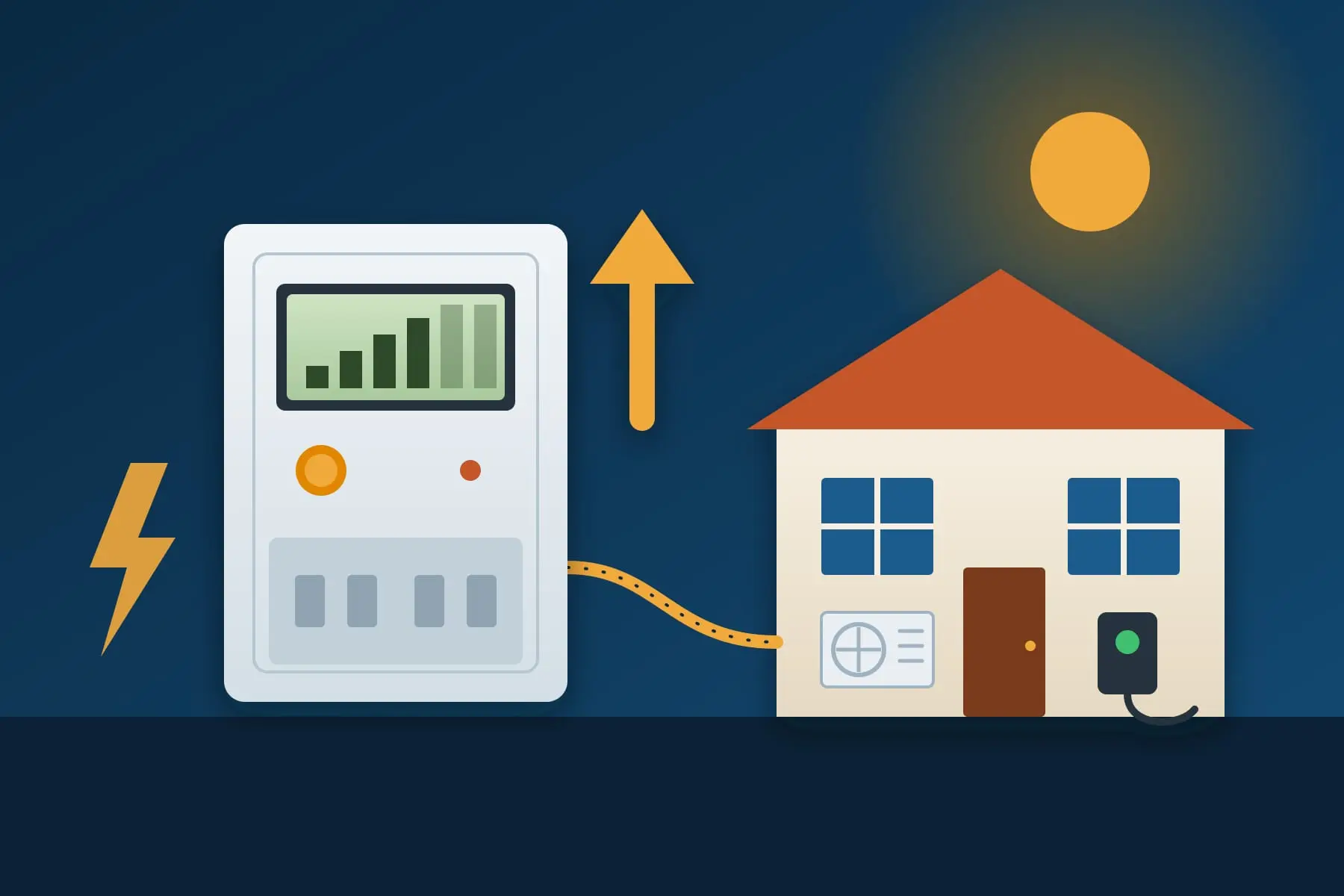
Contracted power (potencia contratada) is the limit in your supply contract, in kW, shown on every bill. You pay a fixed charge for it each month whether you use it or not. When the home draws more than that, the meter cuts the supply. On a smart meter it usually comes back by pressing a button on the meter itself rather than at the consumer unit, which is how people find out the cut was the contract and not a fault.
Maximum admissible power (potencia máxima admisible) is what the installation is built to carry: the cable from the meter to your home, called the derivación individual, and the main breaker at the head of your consumer unit. It is written on the electrical certificate for the home, the boletín or CIE. Your contracted power can go up to that figure, but not past it.
So the question is never just “can I have more power?” It is “is the power I want below the figure on my certificate?”
First, check whether you really need more
Raising the power raises the fixed part of your bill every month you live there, in winter as much as in August. Before asking for it, it is worth knowing what is actually causing the cuts.
- Look at your real peaks. With a smart meter, the distributor’s online customer area shows your consumption hour by hour and usually the maximum demand reached. If the cuts come from two appliances overlapping for twenty minutes at dinner time, moving one of them may be enough.
- Use both powers. On the standard domestic tariff you contract one power for the day (peak and shoulder hours) and another for the night-time valley, and they can differ. A home that charges a car or heats water overnight can raise only the night figure.
- Let the equipment share. An EV charger with load management slows down while the oven is on and speeds up when it is off. Our guide to charging an EV without raising your power explains how that avoids an increase altogether.
- Rule out a fault. If it is the main breaker or the RCD in the consumer unit that trips, rather than the meter, that is not a contract problem. Our guide to common electrical faults helps tell the two apart.
If the honest answer is that the home has genuinely outgrown its contract, because of air conditioning in several rooms, an induction hob, a heat pump, a pool pump or a second car, then the increase is justified.
Route one: within your certificate, a request to the supplier
If the power you want is equal to or below the maximum admissible power on your certificate, the change is usually an administrative one:
- Find the certificate and the figure. Check the potencia máxima admisible and the date.
- Choose the new power. Domestic supplies are contracted in standard steps, such as 3.45, 4.6, 5.75 or 6.9 kW. Pick the step that covers your real peaks, not the largest one available.
- Ask your supplier. Online, by phone or in its app, with the CUPS code from your bill. The supplier passes it to the distribution company, i-DE in most of the province.
- The distributor makes the change. With a smart meter this is normally done remotely, with no visit.
The distributor charges regulated fees for the extra power, billed through your supplier. They are set by regulation, not by any installer, and part of them may already be covered if the home had that power before and it was lowered within the period the rules allow, which is currently three years.
One condition catches people out. When the existing certificate is more than twenty years old, the distributor can ask for an up-to-date one before accepting the change, even if the figure on it would allow it. In older flats in Alicante that is common, and it moves you onto route two.
Route two: beyond your certificate, the installation comes first
If you want more power than the certificate allows, or the certificate is old, missing or cannot be found, an authorised installer has to check the installation and issue a new certificate before the supplier will process the request. What that check covers:
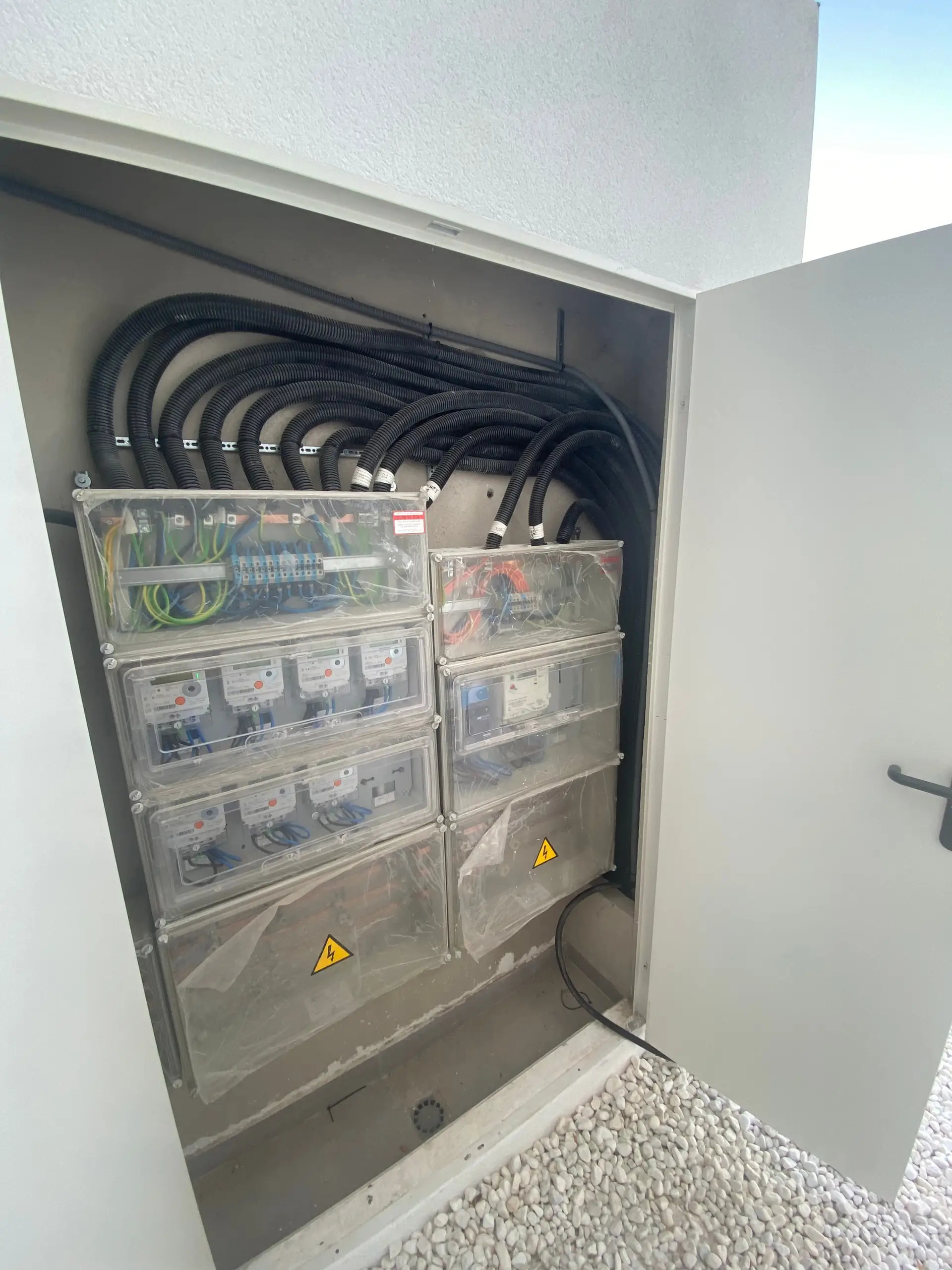
The derivación individual. This is the cable from your meter to your consumer unit, and its size is usually what sets the limit. If it was sized for the needs of the time the building went up, a higher power can mean replacing it with a thicker one.
The main breaker. The interruptor general automático at the head of the board has to match the new power, and the board has to have room for the right protection. If the board itself is the problem, our guide to replacing a consumer unit explains what a compliant one contains.
The circuits inside the home. Raising the power at the meter does not make an old installation able to use it safely. If the cable inside the walls is the weak point, our guide to rewiring an older home covers how to tell.
Single phase or three phase. Most homes are single phase. Past roughly 14.5 kW on a single-phase supply, the next step is usually three-phase, which is a bigger change involving the distributor’s connection, not only your installation.
Once the installation is right, the certificate and its technical design report are completed, signed and registered with the Generalitat, and the supplier then processes the increase. Our guide to getting an electrical certificate in Alicante walks through those steps and the paperwork.
To be clear about our part: we inspect the installation, carry out any work it needs and prepare the documentation. The certificate itself is issued and signed by an authorised installer we work with.
In a block of flats: the communal side
In a building, the derivación individual for each flat runs from the communal meter room, through the building’s shared spaces, up to the flat. Replacing it therefore means working in communal areas, and that needs coordinating with the administrator before anything starts.
There is a second limit in a building: the general supply line that feeds the meter room, which was sized for the building as a whole. When several neighbours have all added air conditioning and induction hobs over the years, that shared line can be the real constraint, and it is a matter for the community rather than one owner. Our page on certificates in Alicante covers why the building’s own paperwork is often the slow part in older city-centre blocks.
Common situations on the Costa Blanca
- Adding air conditioning to several rooms. Each split unit adds load in exactly the hours when the rest of the home is busy. Our guide to the electrical side of air conditioning covers circuits and protection.
- An EV charger. Usually solvable with load management, sometimes with a higher valley power, and only occasionally with a full increase.
- A holiday home becoming a full-time home. A supply that was fine for a few weeks a year with the cooker off often is not for a year-round household with a heat pump.
- A home bought with a contract set years ago. Buyers often inherit a low power. Our guide to electrical checks before buying a property explains what to look at first.
How to ask us to check it
Send the address, the power you have now and the power you think you need, a photo of the certificate if you have it, a photo of the consumer unit with its door open and a recent bill through the contact form or WhatsApp. We will tell you whether a request to your supplier is enough or the installation needs work first, before anything is booked. We cover Alicante and the towns around it; see the Alicante electrician page for the area.