Most conversations about air conditioning are about the unit: how many kilowatts, which brand, split or ducted. The electrical side gets a line at the end of the quote, if that. Yet it is the part that decides whether the system runs quietly for years or trips the house every August evening. This guide covers what the electrics need, and why it should be settled before anything is ordered.
Does air conditioning need its own circuit?
Yes, for any fixed system beyond the smallest units. It should run from the board on its own circuit, with its own circuit breaker sized to the unit and residual current protection.
The reason is the duty. An air conditioner is a motor load that starts against pressure and then runs for hours in the hottest part of the day. That combination finds any weak connection on a shared circuit: a socket that was fine for a vacuum cleaner becomes a hot spot under a compressor running all afternoon.
In Spanish installations built to the elevated electrification level, ITC-BT-25 already provides for a dedicated air conditioning circuit. Many older homes are at the basic level and simply do not have one, so it has to be added.
What size cable does it need?
The cable is sized to the unit’s maximum current, the length of the run and how the cable is installed, and the breaker is then matched to the cable. There is no single right answer for “air conditioning”.
The unit’s installation manual gives its electrical data. That is why knowing the exact model matters to the electrician, not only to the installer. A long run from the board to a far bedroom, or cable sharing a crowded conduit, can push the size up.
Modern inverter units start more gently than older on/off units, which helps. The RCD type matters too with inverter equipment, and it is something to check on the existing board rather than assume.
Does the contracted power need checking?
It does, and the answer depends on how many rooms you are cooling and what else runs at the same time.
A single split in a bedroom rarely changes anything. Several indoor units, or a ducted or multi-split system cooling most of the house, is a much larger load, and it peaks on exactly the evenings when the oven, the hob and the water heater are also on.
If the total can exceed your contracted power, you will find out when the supply cuts. The options are to review the contract, to manage when loads run, or to accept a smaller system. Any of these is fine; discovering the problem in a heatwave is not. If a power increase needs the electrical certificate updating, that is better known in advance, too.
How do multi-split and ducted systems change it?
They concentrate the load. One outdoor unit serving several rooms draws more than any single split, so the circuit, the breaker and the cable are all larger, and the question of contracted power becomes real rather than theoretical.
The size of the system comes from the rooms, not the other way round, which is why the cooling calculation comes first. Once the capacity is known, the electrical requirement follows from the chosen equipment.
How is the outdoor unit isolated?
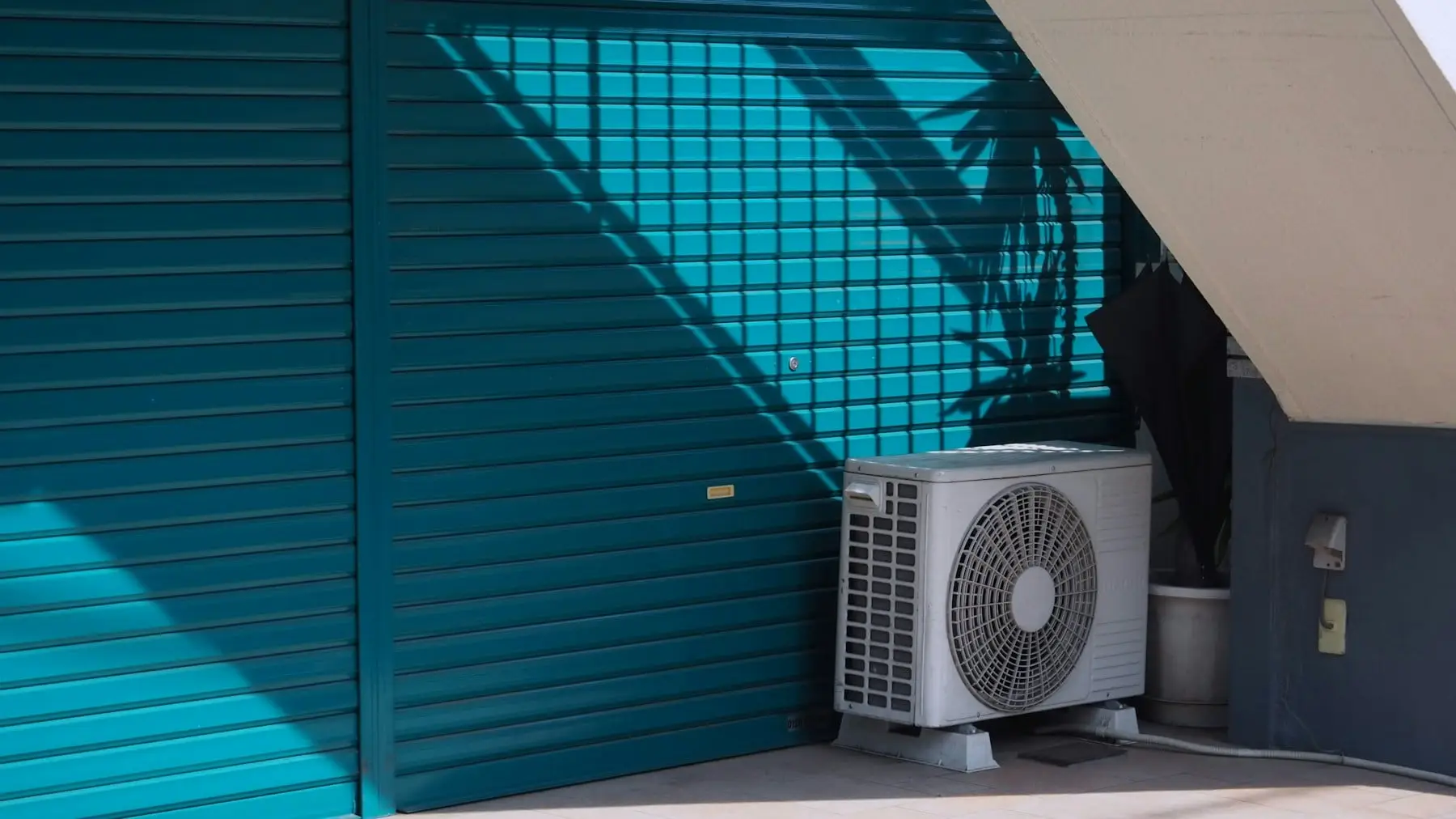
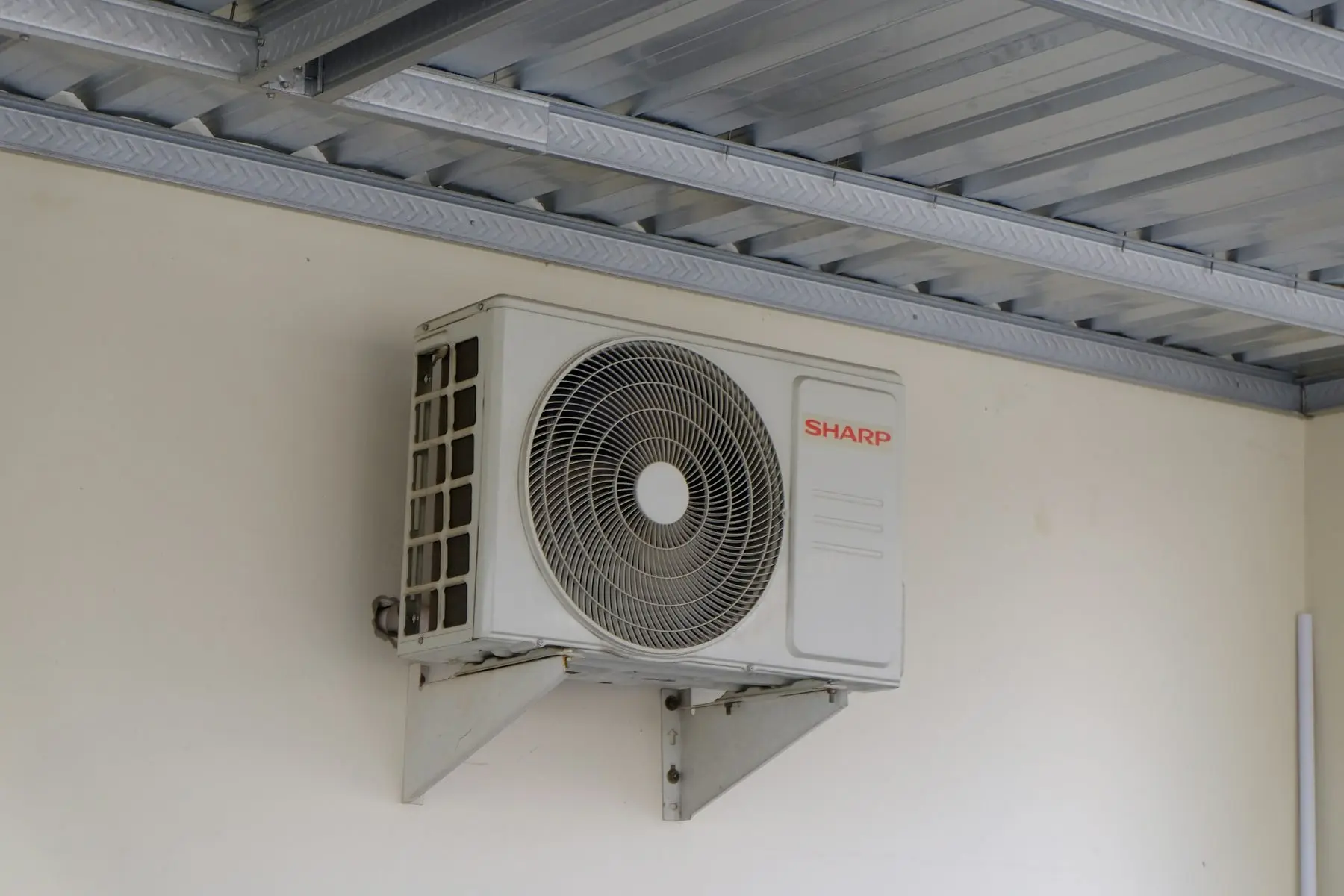
The outdoor unit should be possible to isolate close to where it is, so anyone servicing it can make it dead without relying on someone at the board inside.
Which unit takes the supply depends on the manufacturer: some feed the outdoor unit and run the interconnection to the indoor one, others the reverse. The isolator and the interconnecting cable follow that arrangement. On the coast, anything fixed outside needs to be suitable for the weather and the salt air, and positioned so rain does not run into it.
Where do the cables and condensate go?
The power and interconnection cables usually run alongside the refrigerant pipes, and the condensate drain often shares the same route. That is sensible, provided water and electrics are kept apart.
The condensate line must fall steadily to its outlet and must not drain onto or above any electrical connection. A blocked drain that overflows inside a trunking carrying cable is an avoidable fault. Where the route crosses a façade, the community may have a view on how it looks, and that is worth settling before cables are fixed.
What if the consumer unit is old?
An older board may have no free space, no RCD at all, or one RCD covering the whole property. Adding a new motor load to that arrangement can make nuisance tripping more likely and a genuine fault harder to find.
Sometimes the fix is simple: a space, a breaker and an RCD for the new circuit. Sometimes the board needs replacing, and occasionally the test results show the installation behind it needs work as well. Our guide to consumer unit replacement explains how those three possibilities are told apart.
Why should the installer and electrician agree first?
Because the unit, the position of the outdoor unit and the circuit all constrain each other. The model sets the current, the position sets the cable length and the isolation, and the board sets what is possible without further work.
When the unit is bought first, the electrics have to fit around a decision already made. Agreeing the three together avoids a unit that sits boxed in a hallway while the board is sorted out.
Getting the electrics checked
Send a photo of the front of your consumer unit, the model you are considering if you have one, and where you would like the indoor and outdoor units, through the contact form or WhatsApp. Photos help us understand the job before the visit; the final price comes after we have seen the installation and the route. Our air conditioning installation page covers the rest of the job.