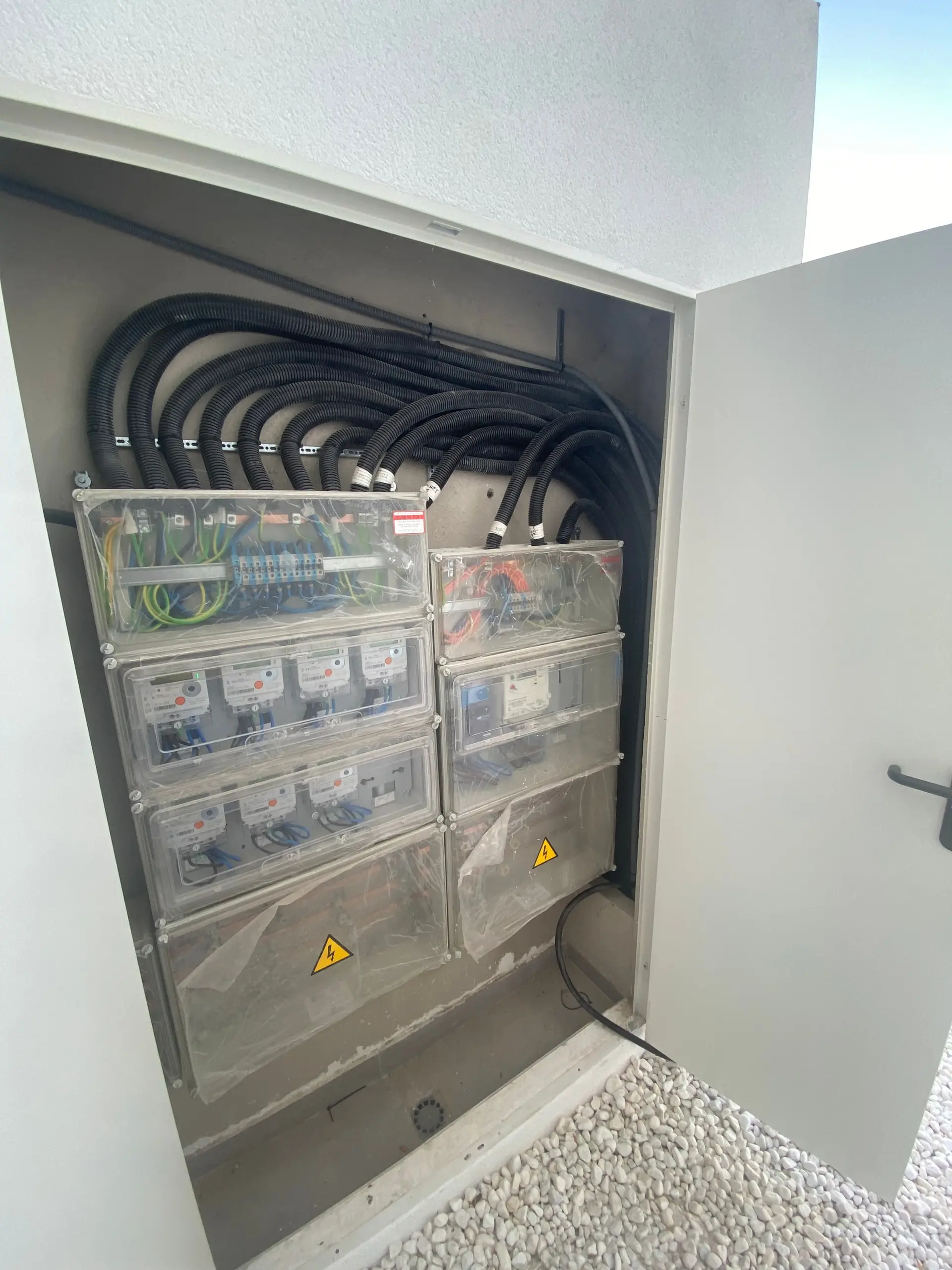
The consumer unit is the box of switches most people only look at when something has gone off. It is also the part of the installation that decides whether a fault is contained in one circuit or becomes a problem for the whole property. Replacing it is one of the most useful things you can do to an older installation, as long as it is the right job.
What are the signs a board needs attention?
A board needs a proper look if any of the following describe it. Ceramic rewirable fuses instead of breakers. No RCD at all, or a single RCD protecting the entire property, so one damp outdoor socket takes out every light and the fridge. Breakers that trip when two ordinary appliances run at once. Scorching, discolouration or a warm smell anywhere near it. Labels that describe rooms or appliances that no longer exist.
Less obvious, but just as telling: a board that has been extended with extra devices bolted on beside it, loose cables visible around the edges, or a cover that no longer closes.
None of these on its own means the property needs rewiring. Several of them are solved entirely at the board.
What does a modern board contain?
A modern domestic board in Spain has three layers of protection, and it helps to know what each one does.
The main switch (IGA). The interruptor general automático switches off the whole installation and protects it against overload. The requirements for these general command and protection devices are set out in ITC-BT-17.
RCDs (diferenciales). These detect current leaking to earth — through damaged insulation, a wet connection or a person — and cut the supply within a fraction of a second. They are what people usually mean by “the trip switch”. A good board splits the circuits across more than one RCD, so a fault in the garden does not plunge the kitchen into darkness.
Circuit breakers (magnetotérmicos). One per circuit, each sized to the cable it protects, tripping on overload or short circuit. They replaced the old fuses.
Some boards also carry surge protection, which limits voltage spikes from the supply or from storms. Whether it is worth fitting depends on the property and what it runs, and it is a conversation rather than a default.
You may also see a separate ICP, the device that enforces your contracted power. In most homes that job is now done by the smart meter, which is why many boards no longer have one.
Board swap, partial rewire or full rewire?
These are three different jobs, and we price them side by side because the difference between them is large and the right one depends on what is behind the board.
A board swap replaces the consumer unit and its devices and keeps the existing circuits. It is the right answer when the cables are sound, the earth works and the circuits match how the property is actually used.
A partial rewire adds or replaces some circuits: a dedicated run for air conditioning, a kitchen that has outgrown the circuit it shares with half the flat, an outbuilding fed from an extension lead. The rest of the installation stays.
A full rewire replaces the circuits throughout. It is needed when the cable itself has deteriorated, when the earth is missing across the property, or when the installation was built for a household that ran a fraction of what yours does.
A quote that names one figure without distinguishing these has usually been worked out for the largest.
Why test before deciding?
Because two measurements decide which of the three jobs you are in, and neither can be judged by eye.
Earth. Many older flats have sockets with an earth pin that connects to nothing, fitted when the originals were swapped. RCDs will still work without an earth, but the protection they give is weaker, and a new board does not create an earth that is not there. If the property has no functional earth, that has to be solved as well, and it changes the scope.
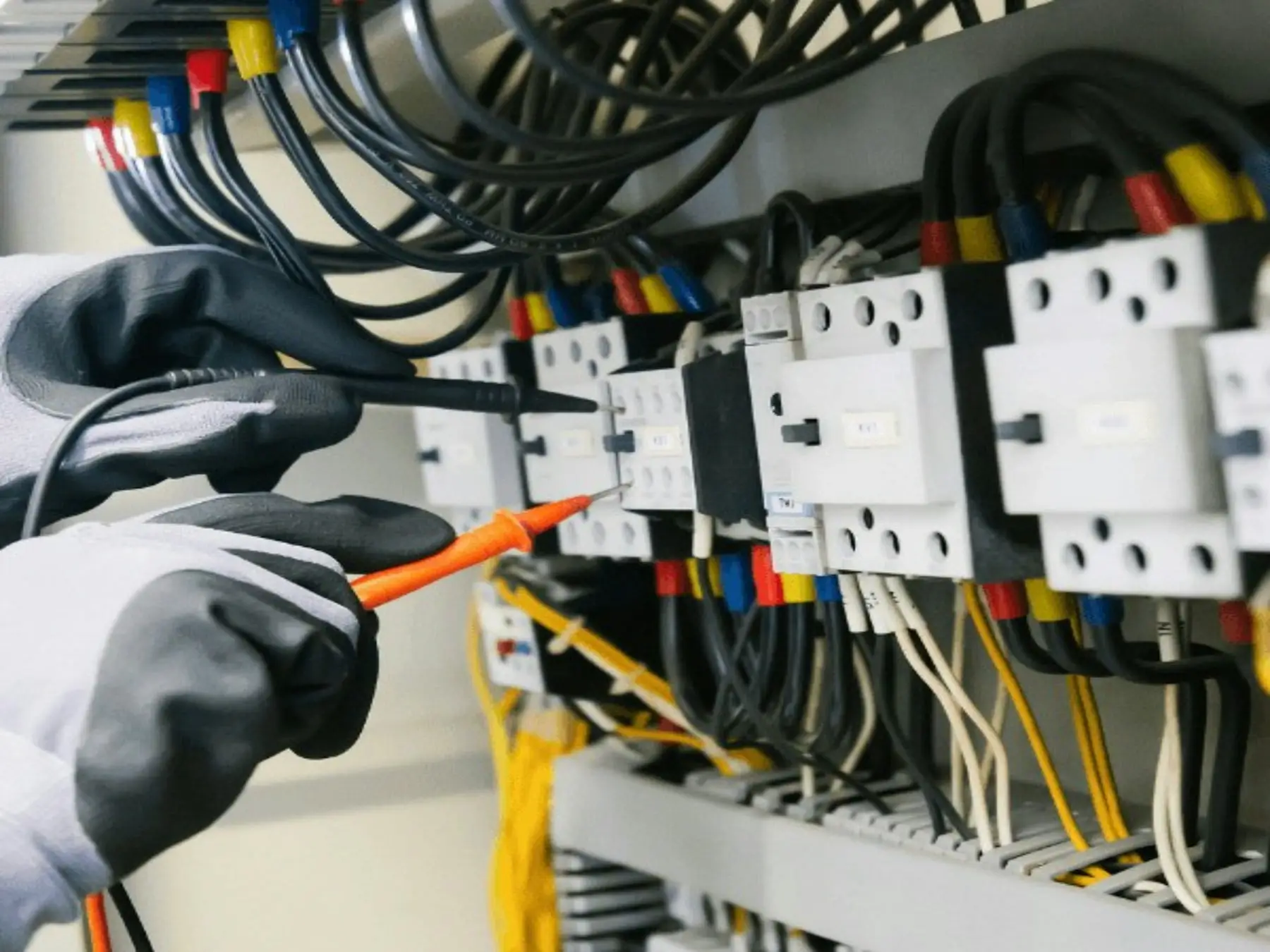
Insulation resistance. This measures whether the insulation on the existing cables is still doing its job. Cable that tests well can stay; cable that tests poorly will trip a new RCD repeatedly, and fitting a sensitive new board on top of it is the fastest way to discover the problem the hard way.
We also check whether new cable can be drawn through the existing conduit, because that is what decides whether any walls need opening if circuits are added. In older Alicante flats the answer varies from building to building.
What happens on the day?
For a straightforward board swap, the power is off for most of a working day. Plan for the fridge and freezer to stay closed and for anything with a clock to need resetting.
The old board is isolated and removed, the new one is fitted, and each circuit is reconnected to its own breaker and assigned to an RCD. Then every circuit is tested, the RCDs are trip-tested, and the labels are written to describe the property as it is now, not as it was when it was built.
Occasionally a circuit that ran quietly under the old board trips the new RCD straight away. That is not the new board failing; it is an existing fault that the old one was not sensitive enough to see. It is found and explained before we leave, and it is one more reason testing comes first — so these surprises are rare rather than routine.
What paperwork should you get?
You should get documentation of the work: what was fitted, which circuits it protects and the test results. Keep it with the property papers, because a buyer, an insurer or a supply contract may ask for it later.
If the work goes together with a power increase, a change of use or a property that needs an electrical certificate for another reason, that is a separate step. We bring the installation up to standard and prepare the certificate paperwork, and we tell you at the quote stage if it applies.
How to get it looked at
Open the hinged door on the front of the board — never the cover behind it — and take a clear photo of the switches and any labels. Send it through the contact form or WhatsApp with a line about what prompted the question. Photos help us understand the job before the visit; the final price comes after we have tested the installation. If your board is tripping rather than just old, the guide to common electrical faults may help you narrow it down first.