Paying out-of-hours rates for something that could have waited until Tuesday is a waste of money. Waiting until Tuesday with something that could start a fire is considerably worse. This is how to tell the two apart.
Stop and call 112 if any of this is true
If you can smell burning, see smoke, or see flames, this is a fire, not an electrical fault. Leave the property and call 112. Do not go looking for the source, do not open anything, and do not wait for an electrician to arrive and make the decision for you.
An electrician is the right call after the fire service has said the property is safe, not before.
Genuine emergencies
Five situations where the fault is unsafe to leave and waiting is not reasonable.
A burning or fishy smell from a socket, a switch or the consumer unit. That smell is hot plastic, and hot plastic means a connection is running at a temperature it should never reach.
Visible scorching, melting or discolouration at a socket, plug or in the board. Same reason. The damage you can see is the end of a process that has been running for a while.
Sparking or arcing you can see or hear, including a buzzing or crackling from a switch or the board.
Water reaching electrical equipment — a leak above a light fitting, a flooded plant room, a soaked outdoor socket, water in a meter cabinet. Keep away from it and say so when you call, because it changes how the job is approached.
A protective device that trips again immediately, every time. This is the one people most often get wrong. A breaker that will not stay in is doing its job: it is containing a live fault. Repeatedly forcing it back on removes the only thing standing between that fault and you.
Things that can safely wait
If nothing above applies, the rest of the installation is behaving normally, and there is no smell or visible damage, then almost everything else can wait for a normal appointment at a normal rate.
One dead socket. One failed light fitting. A dimmer that buzzes. An extractor fan that has stopped. An outside light that failed after heavy rain. An oven or hob that has stopped working while everything else is fine. One breaker that tripped once, reset cleanly, and has stayed on since.
That last one is worth expanding. A single trip that resets and holds is usually a failing appliance, not a wiring fault. Unplug things on that circuit one at a time, use it normally, and you will often identify the culprit yourself before anyone visits.
The line is safety, not inconvenience
This is the distinction that matters, and it is not intuitive.
A whole floor without light is inconvenient but not dangerous. A single socket that smells of burning is dangerous even though it is affecting one outlet and nothing else. The severity of the disruption tells you almost nothing about the urgency of the fault.
What to do before anyone arrives
Three things, all safe.
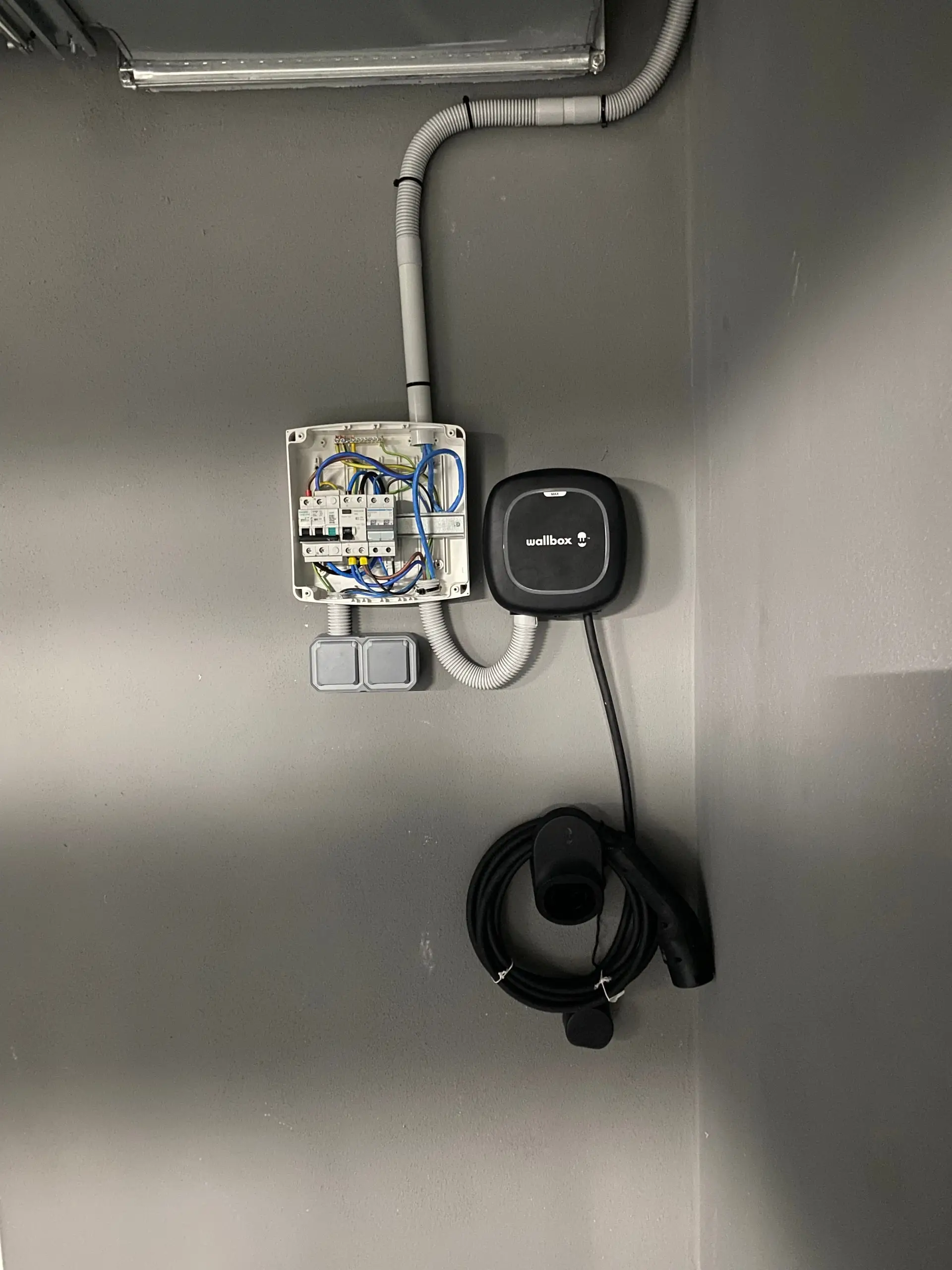
Look at the front of your consumer unit and note which switches have moved. The hinged door on the front is designed to be opened by anyone. Do not remove the cover plate behind it — there are live terminals behind that panel even when every switch is off.
Unplug appliances on the affected circuit, particularly anything that was running when the fault appeared.
Check whether your neighbours have power too. If a whole stair or a row of properties has gone dark, the fault is on the communal or distributor side, and the distribution company is usually the right first call rather than an electrician.
What never to do
Do not remove the cover of a consumer unit. Do not work on any wiring. Do not repeatedly reset a device that keeps tripping. Do not investigate anything wet. Do not use a socket or appliance that has scorching or a burning smell, even if it still works.
What to tell us when you call
What happened and when. What else is affected — one socket, one room, the whole property, the neighbours too. Whether there is any smell, visible damage or water involved. What was running when it happened. Which town you are in.
That is enough for us to tell you, on the call, whether this is something that needs attending tonight or something that should wait until morning — and we will tell you the second answer when it is the true one, because being sent away with an honest answer is the reason people call back.