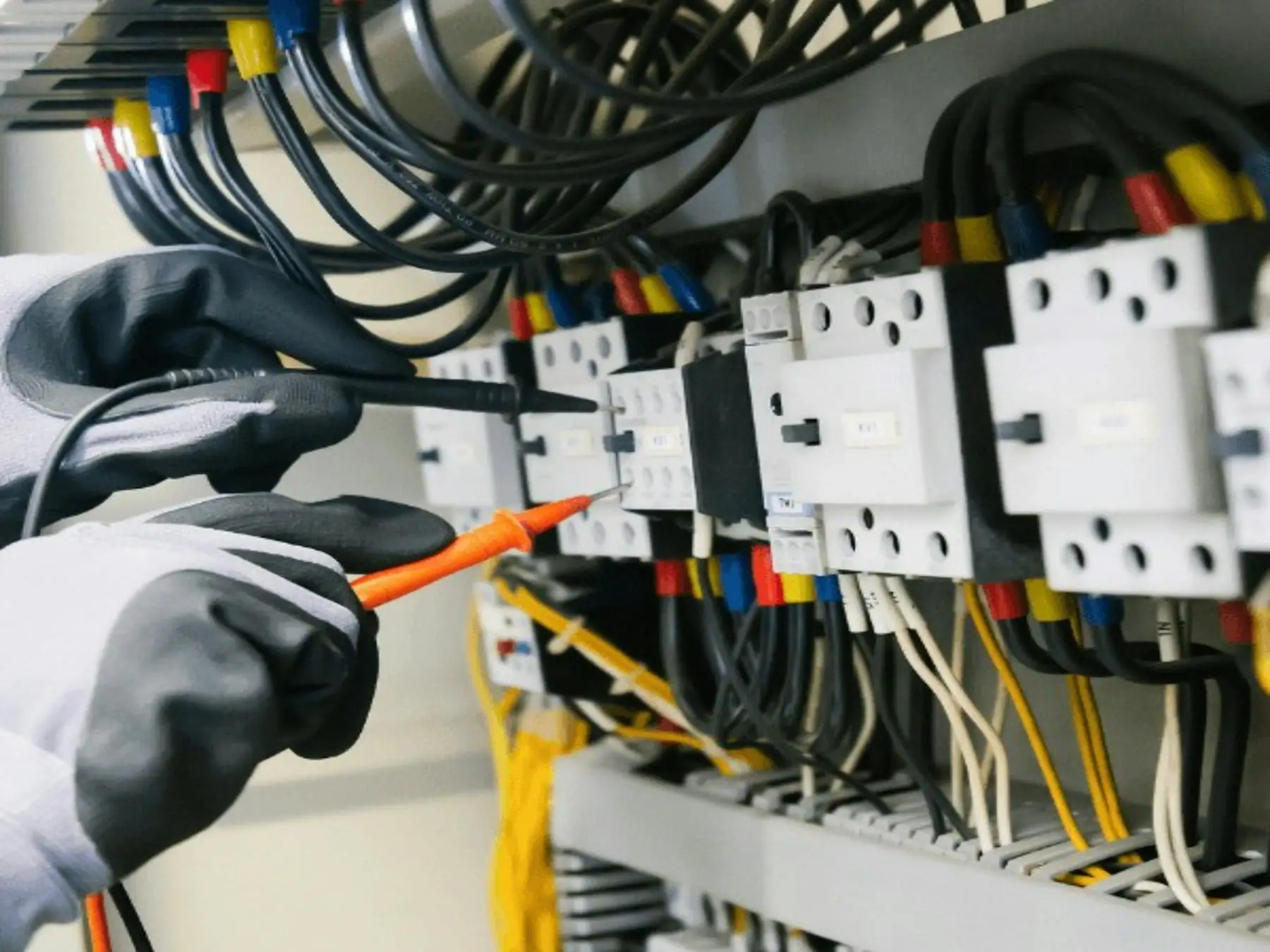
Services
EV charger installation in Alicante and the northern Costa Blanca
From a single wallbox on a villa terrace to a metered point in a communal garage, quoted only after we have read what your supply can actually give.
- 24/7 for genuine emergencies
- We tell you the call-out fee before we set off
- Typically on site in 60–90 minutes
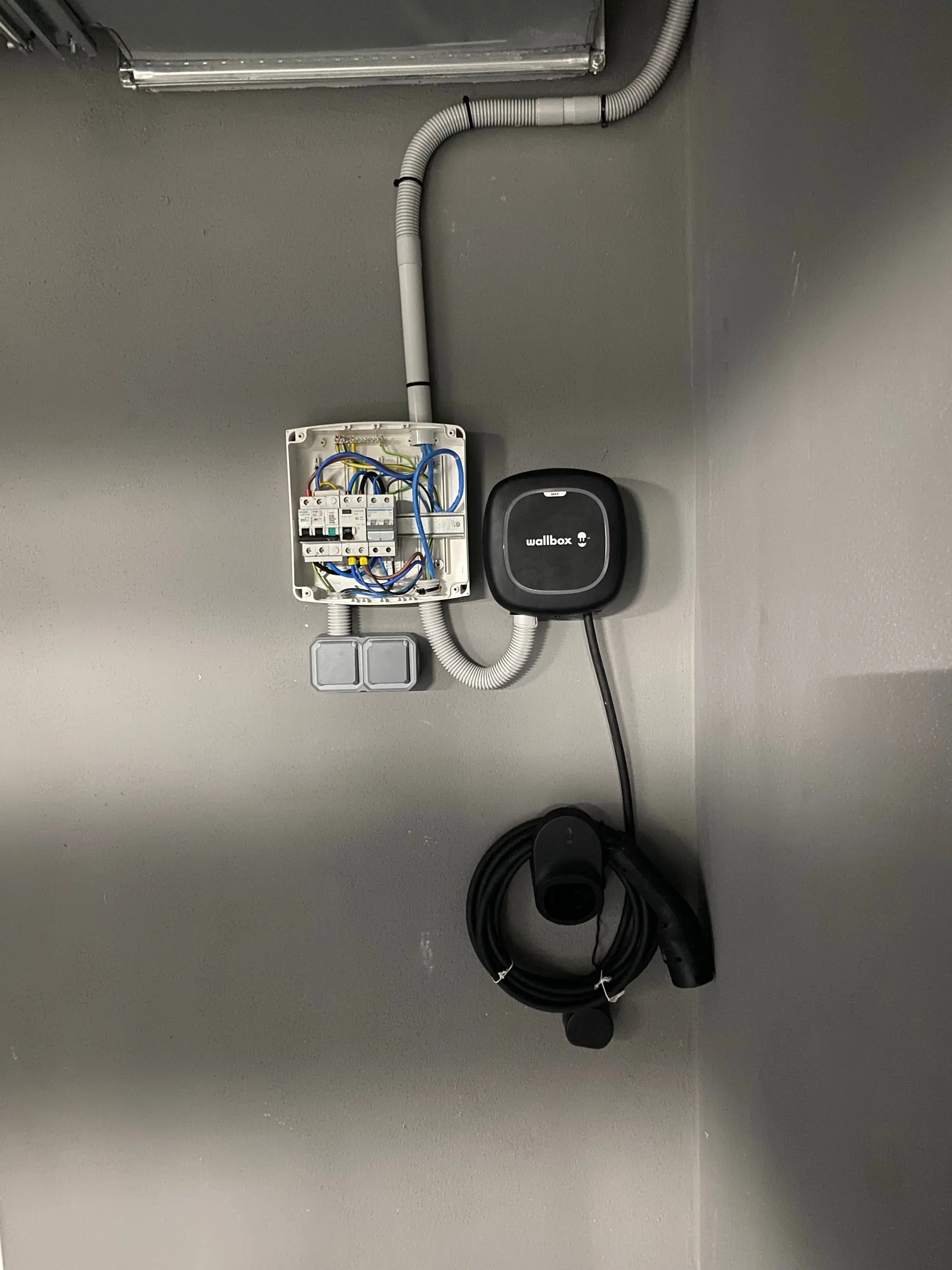
An EV charger installation is mostly a cable run and a protection decision. The charger itself is the cheapest and least interesting part; what determines the price is how far the cable has to travel from your meter, what it has to pass through on the way, and whether your existing supply can carry the load without an upgrade.
That is why we do not quote from a photograph. We read the meter cabinet, measure the run and look at what is already on the board, then give you a fixed figure. Every job on this page was done that way.
What does an EV charger installation actually involve?
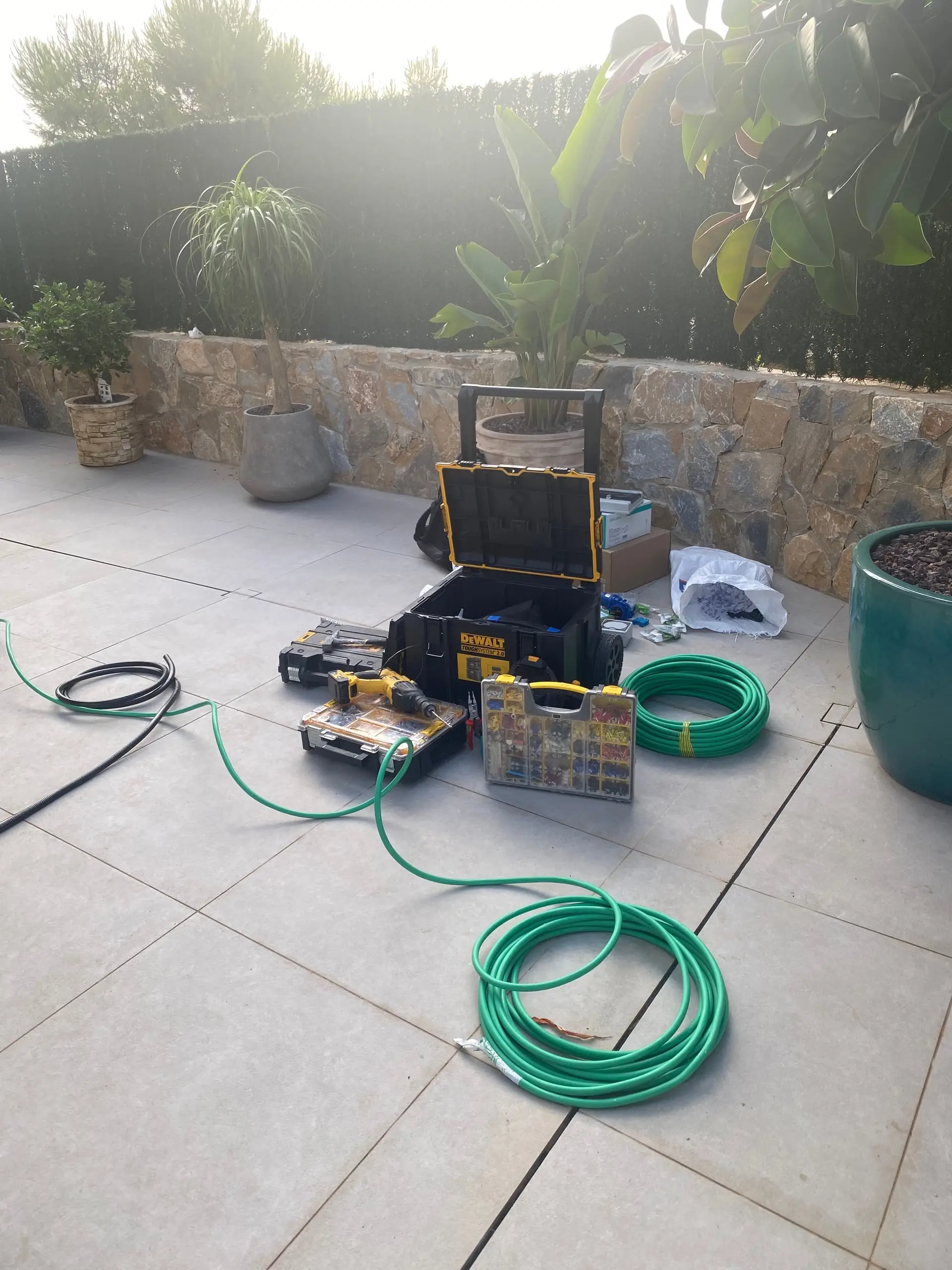
A compliant home charging point is a dedicated circuit, not a socket on an existing one. It runs from your consumer unit or meter position on its own cable, through its own protective devices, to the charger — and under ITC-BT-52 it needs its own residual current protection rather than sharing a device with the rest of the house.
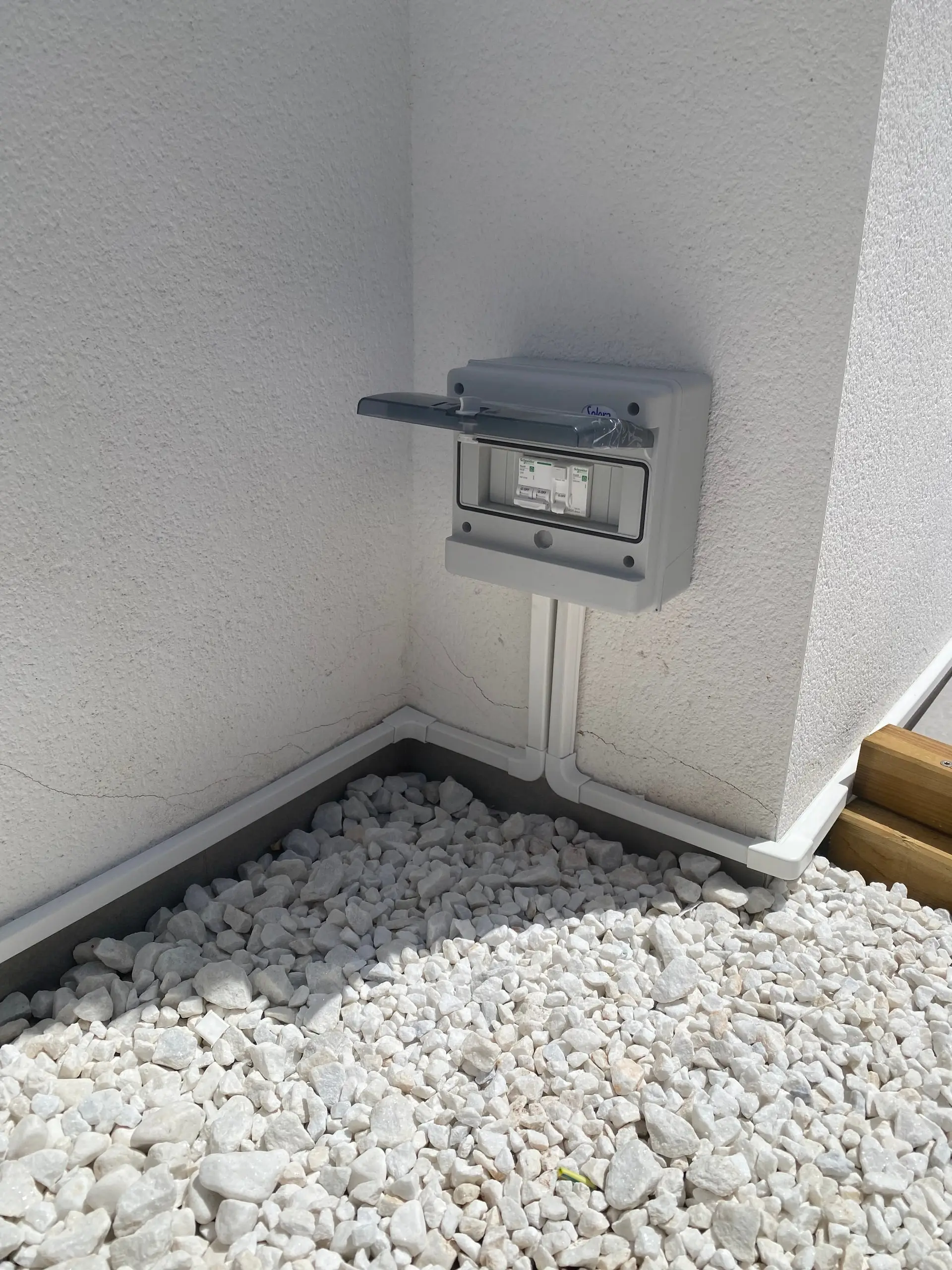
In practice the work is: confirm the available supply at the meter, choose the cable size for the distance, run the cable, fit an enclosure with the breaker and RCD, mount the charger, connect, test and commission. On a straightforward villa that is a day. In an underground garage with a 40-metre run and a communal board, it is longer.
The reason a dedicated circuit matters is duration rather than peak load. A kettle draws more current than a 7.4 kW charger, but it does so for two minutes. A car charges at close to full load for hours at a time, and every connection, terminal and protective device on that circuit sits at working temperature for the whole session.
Do you have to increase your contracted power?
Usually not, because dynamic load management solves the problem more cheaply. A current sensor on the supply tells the charger how much the rest of the house is using, and the charger reduces its own draw to fit inside what is left. Your car charges more slowly while the oven is on, and faster once it is off.
The alternative — raising your contracted power with the distributor — increases the fixed portion of every bill for the rest of the time you live there, in exchange for a faster charge on the few occasions the house is at full load simultaneously. For most households the sensor is the better trade.
There are cases where the increase is genuinely the right answer: a low contracted power on an older supply, two electric cars, or a property where a heat pump and an induction hob already push the existing limit. We tell you which situation you are in after reading the meter, not before.
7.4, 11 or 22 kW — which do you actually need?
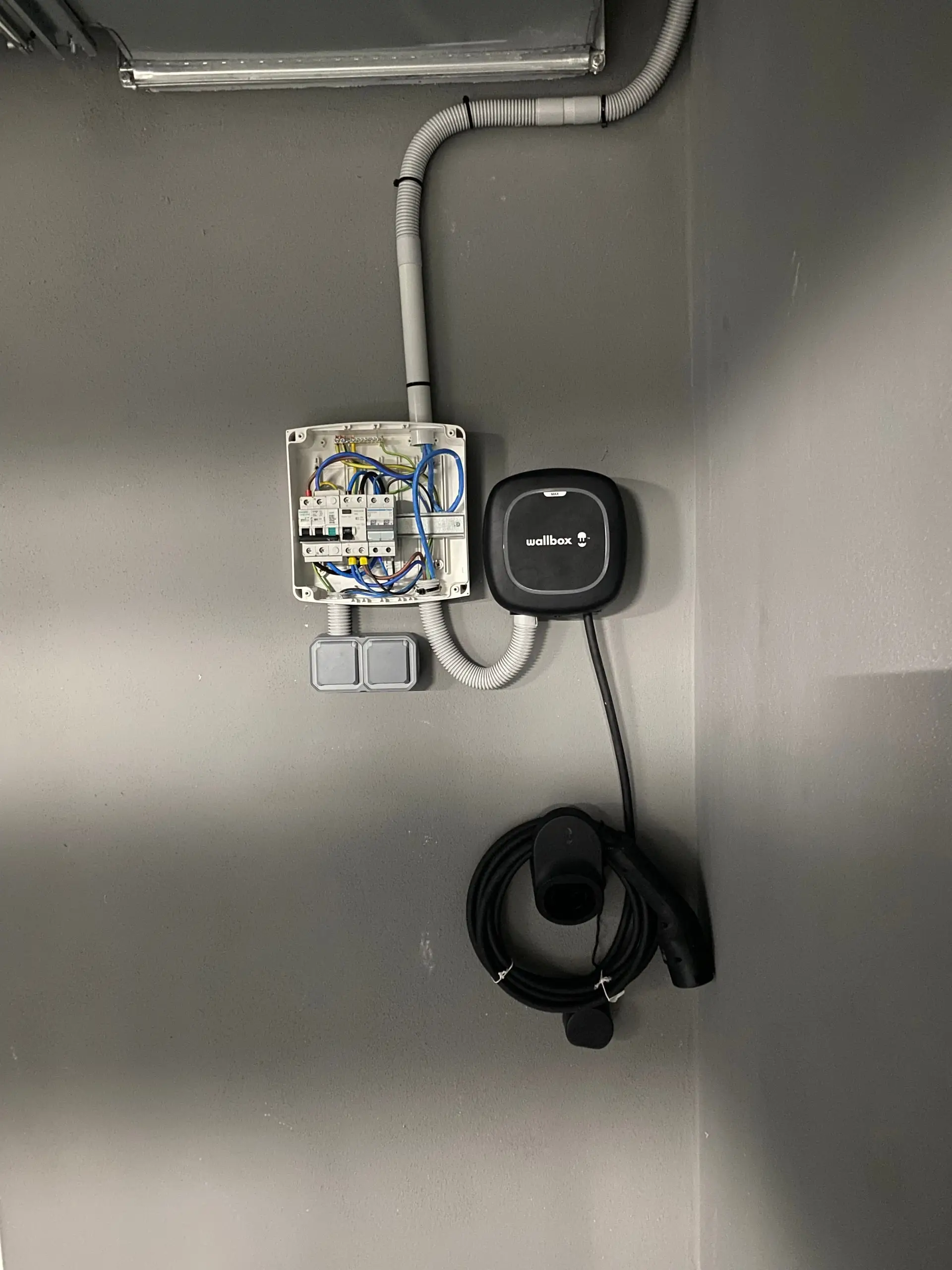
For overnight home charging, 7.4 kW is enough for almost everybody. It adds roughly 35 to 40 km of range per hour, which fills any normal daily use several times over during the hours a car sits on a driveway. Paying for more capacity buys nothing if the car is parked for ten hours anyway.
11 and 22 kW need a three-phase supply, which most Spanish homes do not have — three-phase is common in commercial units, industrial estates and some newer developments, and rare in older apartments. Where it exists, 11 kW is the sensible step up; 22 kW is worth it only if the vehicle can actually accept it, and many cannot.
The honest check is the car, not the charger. A vehicle limited to 7.4 kW on AC will charge at 7.4 kW from a 22 kW wallbox, and the extra capacity does nothing at all. We ask which car before recommending anything.
Installing a charger in a communal garage
In a comunidad de propietarios you have the right to install a charging point in your own space, and you do not need the community to approve it — you need to notify them in writing beforehand. That is a legal right, not a favour, and it surprises a lot of owners who have been told otherwise at a junta.
What does need deciding is where the electricity comes from. The clean answer is an individual supply or a dedicated meter for the charging point, so the consumption is yours and appears on your bill rather than on the community's. Hanging a charger off the communal supply and settling up informally later is where disputes start.
The practical side is the cable route: from the meter room or your own supply, along the communal ceiling or wall on proper containment, to your space. We install so that the route is extendable, because in most garages the second and third owner follow within a couple of years.
What we check before quoting
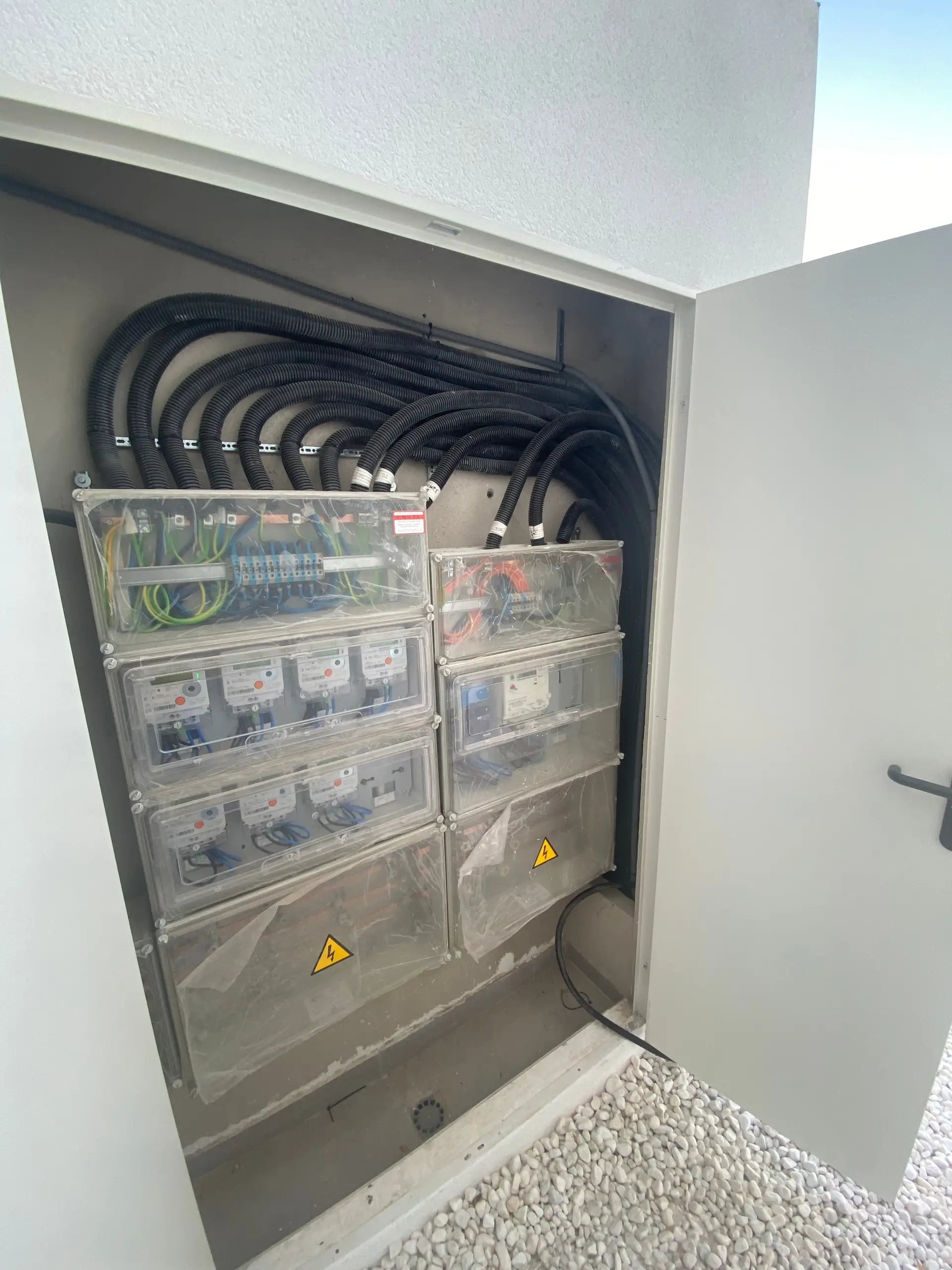
We check four things: the available power at the meter, the distance from supply to parking space, the route the cable can physically take, and the state of the existing board. Those four determine almost the entire cost, and none of them can be assessed from a description over the phone.
The distance matters more than people expect. Cable is sized so that the voltage drop over the run stays within limits at full load, so a 30-metre run needs a heavier conductor than a 5-metre one for exactly the same charger. That difference is often larger than the price gap between two charger models.
What we do not do is quote a headline figure and then discover the cable run on the day. The quote you get is the quote you pay unless you change the specification.
How we work
Read the supply
We open the meter cabinet, confirm the available power and check whether the supply is single or three phase.
Measure the route
We measure the cable run from the supply to the parking space and agree where the cable will physically go.
Fixed quote
You get one figure covering cable, protection, charger and labour, with no provisional items.
Install
We run the cable on proper containment, fit the protection enclosure and mount the charger.
Test and hand over
We test the circuit and the protective devices, commission the charger and show you how it works.
Common questions
Can I install a charger in my communal garage without the community agreeing?
Yes. In a comunidad de propietarios you have the right to install a charging point in your own parking space and only need to notify the community in writing in advance. Their agreement is not required.
Will charging at home trip my main switch?
Not if the charger has dynamic load management, which measures what the rest of the property is drawing and reduces the charge rate to stay inside your contracted power. Without it, a full-rate charge alongside an oven and a hob can exceed the limit.
How long does the installation take?
A straightforward home installation with a short cable run is a single day. A communal garage with a long run, containment along a shared ceiling and a separate meter position typically takes longer, and we tell you which yours is after the site visit.
Do I need three-phase for a fast charger?
For 11 kW or 22 kW, yes. Most Spanish homes are single phase, which supports up to 7.4 kW — enough to add around 35–40 km of range per hour, and more than sufficient for overnight charging.
Can you install a charger I have already bought?
Yes. We install customer-supplied chargers and will tell you before starting whether the model suits your supply, your car and the distance involved.
What paperwork do I get?
You get the invoice and the installation documentation for the circuit, which is what you need for a comunidad notification, for a future property sale, or for any deduction you may be claiming.
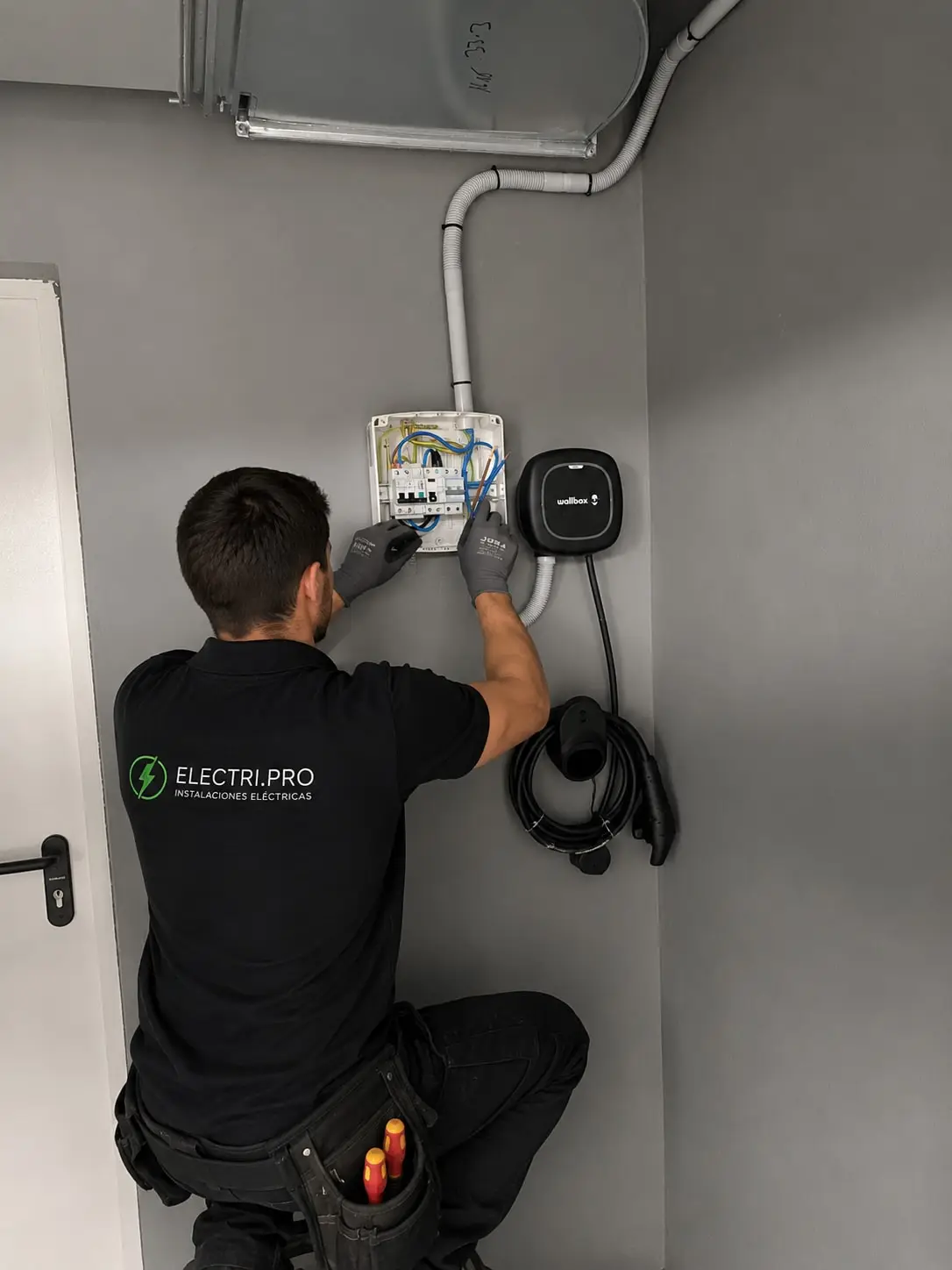
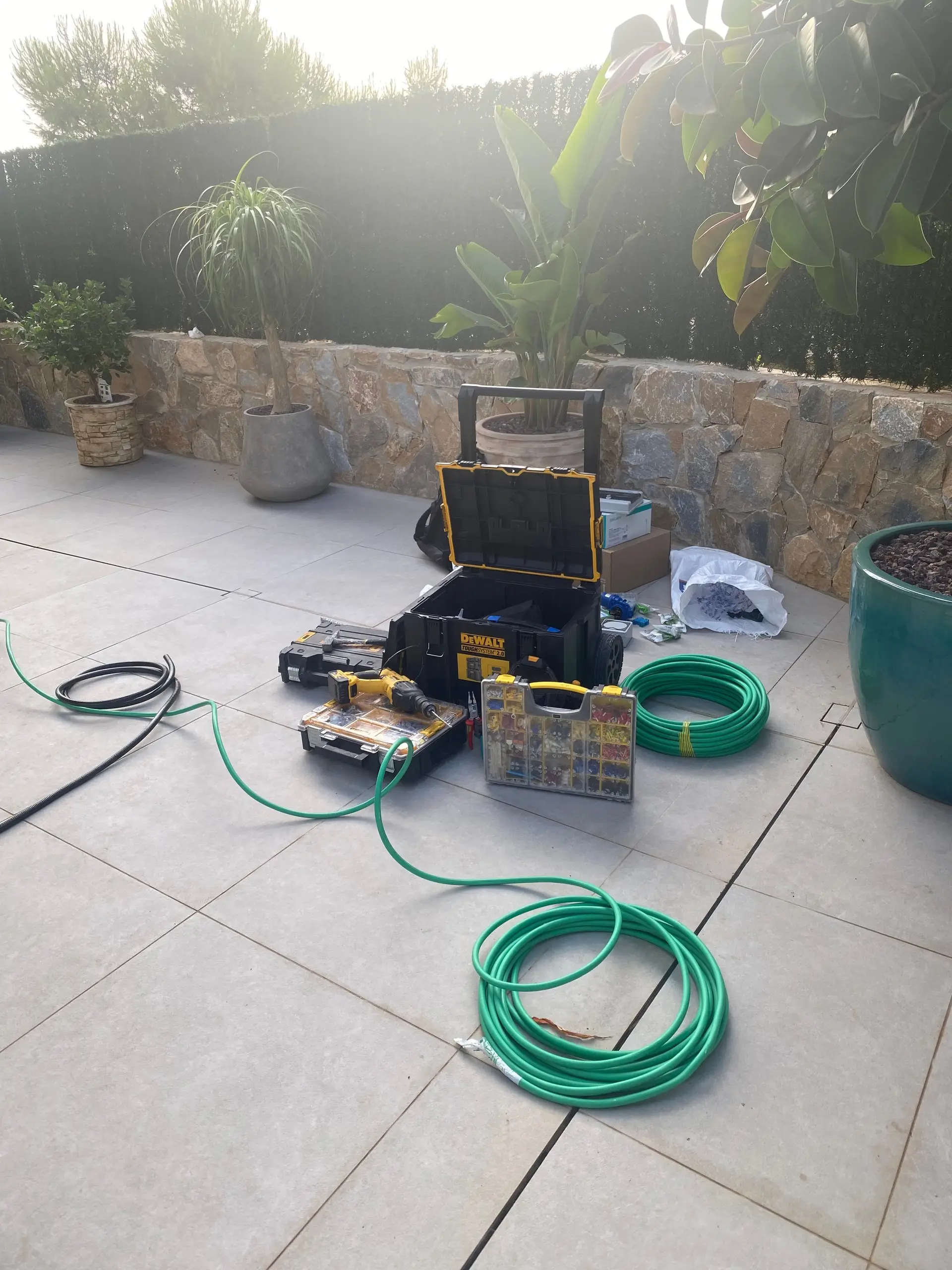
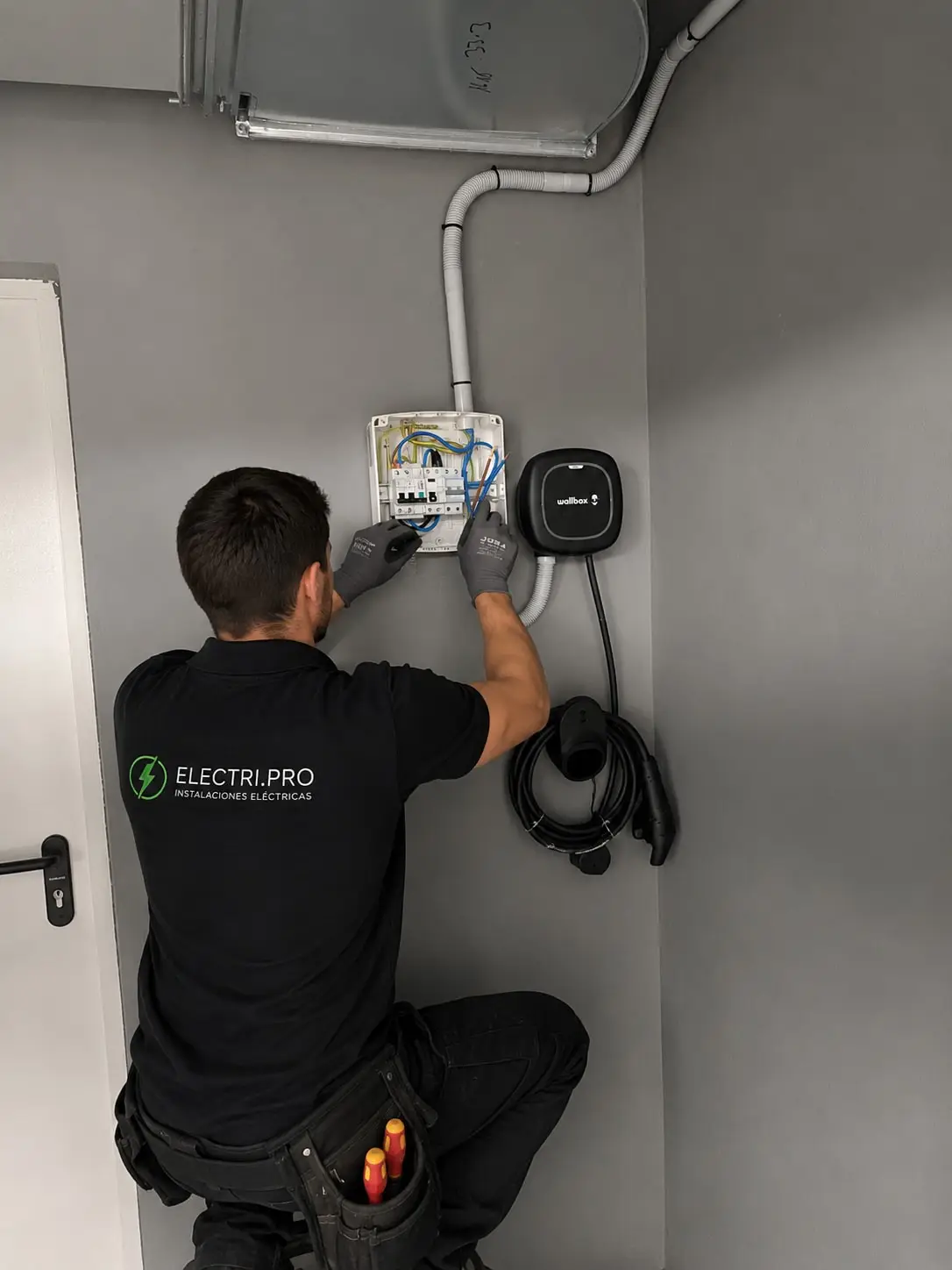
Our own work
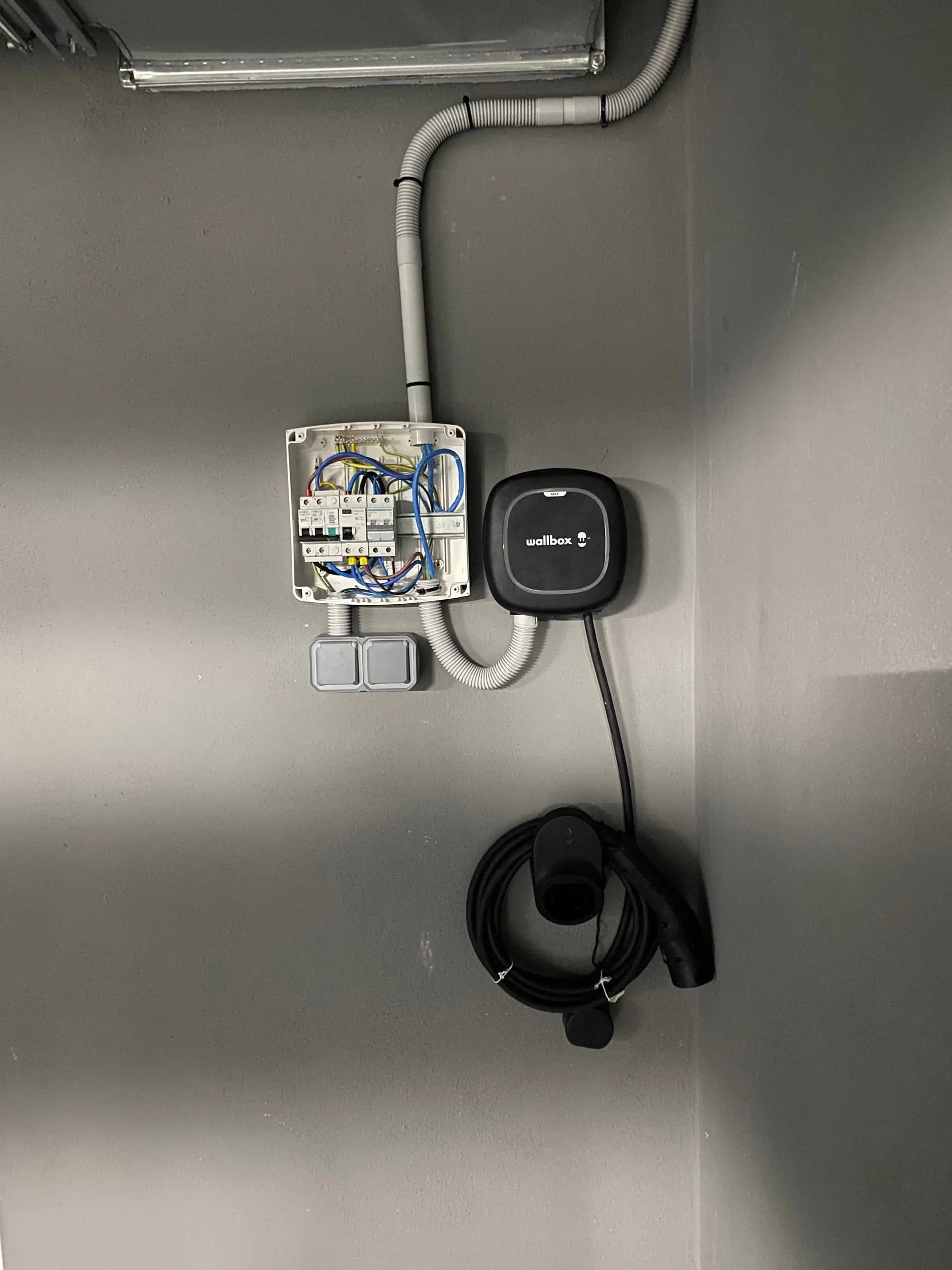
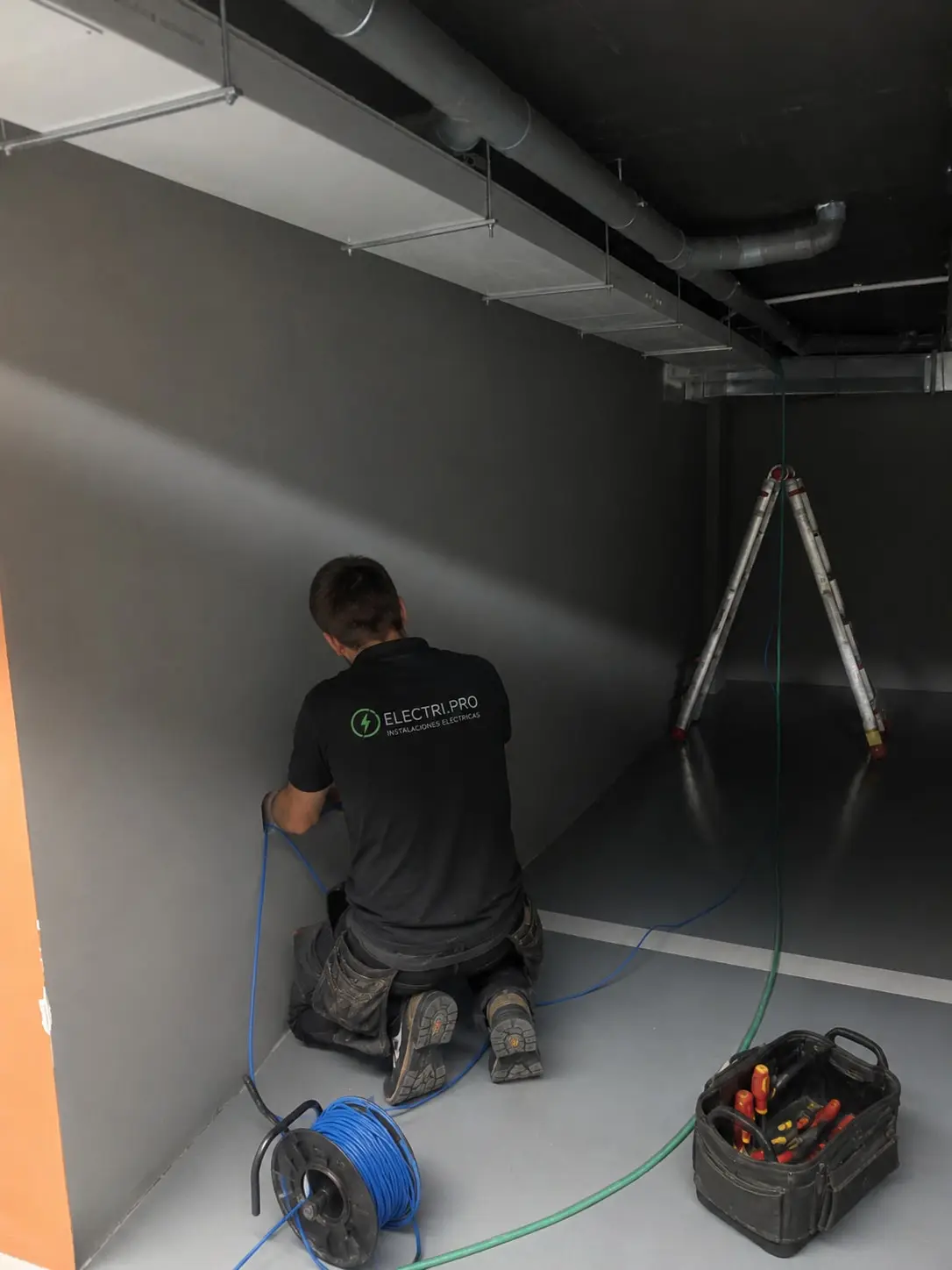
Photographs of installations we carried out ourselves. No stock photography.
Towns we cover
Guides worth reading first
EV charger installation
What an EV Charger Installation Really Costs
The charger is rarely the expensive part. Four other things are, and none of them are visible in a photograph.
EV charger installation
7.4, 11 or 22 kW - Which Charger Do You Need?
The honest answer for most homes is the cheapest one, and the reason is your car rather than the wallbox.
EV charger installation
Charge Your EV Without Increasing Contracted Power
A sensor on your supply is almost always cheaper than a permanently higher standing charge, and it does the same job.
Related services
Shall we talk about your job?
Tell us what you need and we will come back with a price and a date. No obligation.