Services
Pool, spa and outdoor electrics
Everything outdoors fails differently: water gets in, salt gets at the terminals, and the one thing that keeps a pool safe is the part nobody can see.
- 24/7 for genuine emergencies
- We tell you the call-out fee before we set off
- Typically on site in 60–90 minutes
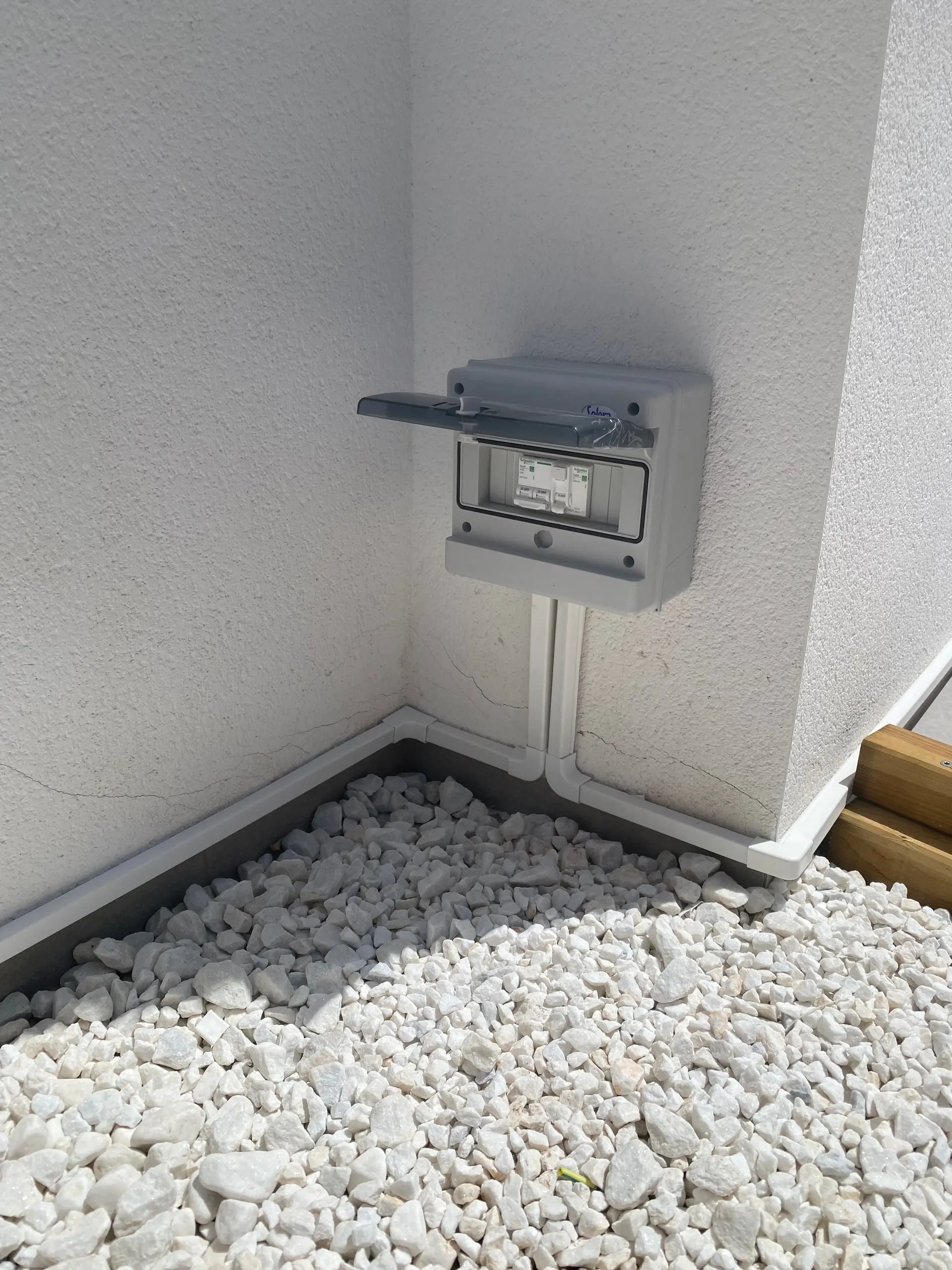
Outdoor electrical work is its own discipline. A circuit inside a house is dry, at a stable temperature and undisturbed; the same circuit serving a pump, a spa or garden lighting is wet, hot, cold, salty and periodically dug through by a gardener.
The rules are stricter for good reason. Water removes most of the margin that keeps an indoor fault survivable, and around a pool the human body is wet, barefoot and in contact with metalwork.
What is equipotential bonding, and why does it matter most?
Bonding is a conductor that ties together all the metal around a pool — ladder, handrails, the pump and its pipework, the reinforcement in the shell, any metal fitting within reach — so that everything sits at the same electrical potential.
It matters because a shock needs a difference in potential between two things you are touching. Bonding removes that difference. If a fault energises a metal ladder, a properly bonded pool means the water, the surround and the ladder rise together, and there is no difference for current to flow across. It is not a formality and it is not paperwork: it is the measure that protects a wet person standing barefoot on wet stone.
It is also invisible, which is why it is the thing we most often find missing or failed. On older installations the bonding conductor is frequently either absent altogether or corroded through at a connection, and neither shows any symptom whatsoever until the day it is needed. Testing continuity takes minutes.
Underwater lighting and why the voltage is low
Lighting inside the pool runs at extra-low voltage from a transformer, not at mains voltage. That is a deliberate design decision: at that voltage a fault in a submerged fitting cannot deliver a dangerous shock to somebody in the water.
The transformer therefore has to be somewhere safe and dry, and its position is prescribed rather than convenient. The recurring fault we find is that transformer installed in a chamber that floods — a pit beside the pool, or a plant room below the waterline — where it sits in water every autumn and slowly destroys itself.
When underwater lights start failing repeatedly, the light is rarely the problem. It is almost always the supply to it, and the answer is to move the transformer rather than to keep replacing fittings.
Plant rooms, pumps and the water that gets in
The filtration plant room is the single worst environment on a property. It is often partly below the waterline, it is permanently humid, and it collects everything the ground drains toward it. Panels in these rooms corrode from the back, where nobody looks, and the first symptom is usually a nuisance trip that gets reset for months before anything is investigated.
A pump is a motor load that starts against pressure and then runs for hours, which is exactly the duty that finds a marginal connection. On a long run to a plant room at the end of a garden, voltage drop matters as much as current rating, and undersized supplies to pool equipment are among the more common faults we find.
After the autumn storms, we get a run of calls that are all the same fault: water has tracked along a trench or into a chamber and reached a connection. On sloping ground this is a seasonal pattern rather than bad luck, and it is why drainage and proper protection of buried cable matter more here than the cable itself.
Salt chlorination and what it does to terminals
Salt systems are common here and they are a good answer to water treatment, but they add electrical equipment to an already hostile position. The cell has its own low-voltage supply and its own control unit, and both live beside a pool in an atmosphere carrying both chlorine and salt.
What we find is corrosion at terminals rather than failure of the cell itself. Connections in the control enclosure degrade, resistance rises, and the system starts behaving erratically — reading wrongly, cutting out, or failing to produce. Owners generally suspect the cell, which is the expensive part, when the fault is a terminal.
The enclosure specification is what decides how long any of it lasts. An indoor-grade enclosure fitted outdoors beside a salt pool will fail within a couple of seasons, and that is the commonest shortcut we are called out to correct.
Spas, hot tubs and why they are not like a pool
A spa is an electrical problem of duration rather than peak. Its heater holds temperature for hours a day, every day, and unlike a pool pump it is often running in winter. That sustained load is what a circuit has to be designed around.
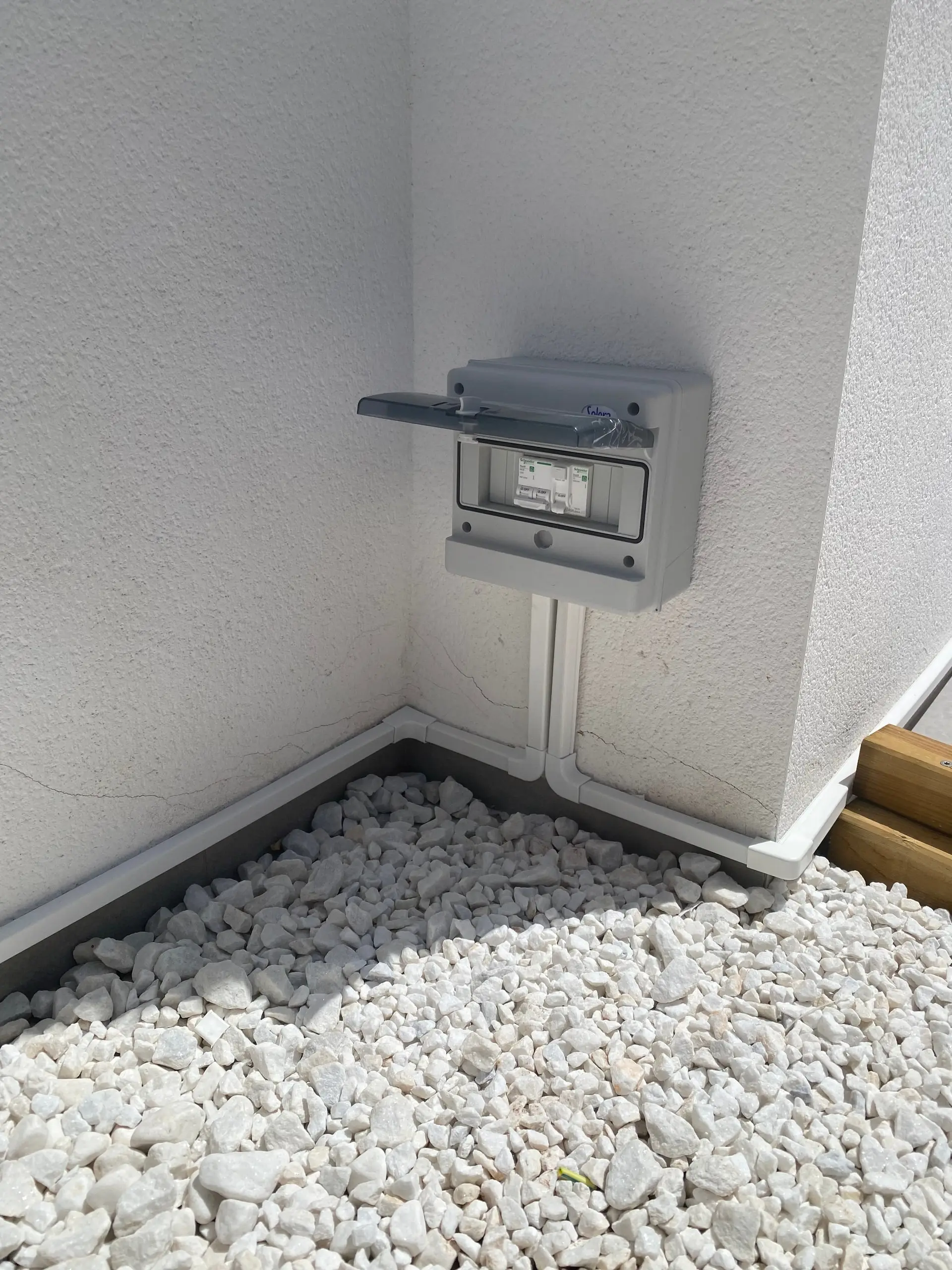
It needs a dedicated circuit from the board with its own high-sensitivity residual current protection, its own weatherproof enclosure outside the house, and the metalwork bonded like any other pool. Running one from a garden socket or an existing outdoor circuit is the shortcut, and it is the one we most often find on units that were delivered and connected by whoever installed the tub.
The supply check comes first. A spa added to a house that already has air conditioning and an induction hob can take it past its contracted power, and that is better established before the tub arrives than after.
How we work
Test the bonding
Continuity across ladder, handrails, pump, pipework and reachable metalwork — measured, because it has no symptoms.
Read the supply
We check the board and the run to the plant room, where voltage drop matters as much as current rating.
Inspect the plant room
Enclosures are checked from behind, which is where panels in humid rooms corrode first.
Specify for the position
IP-rated enclosures, stainless fixings and transformers out of anything that floods.
Test and document
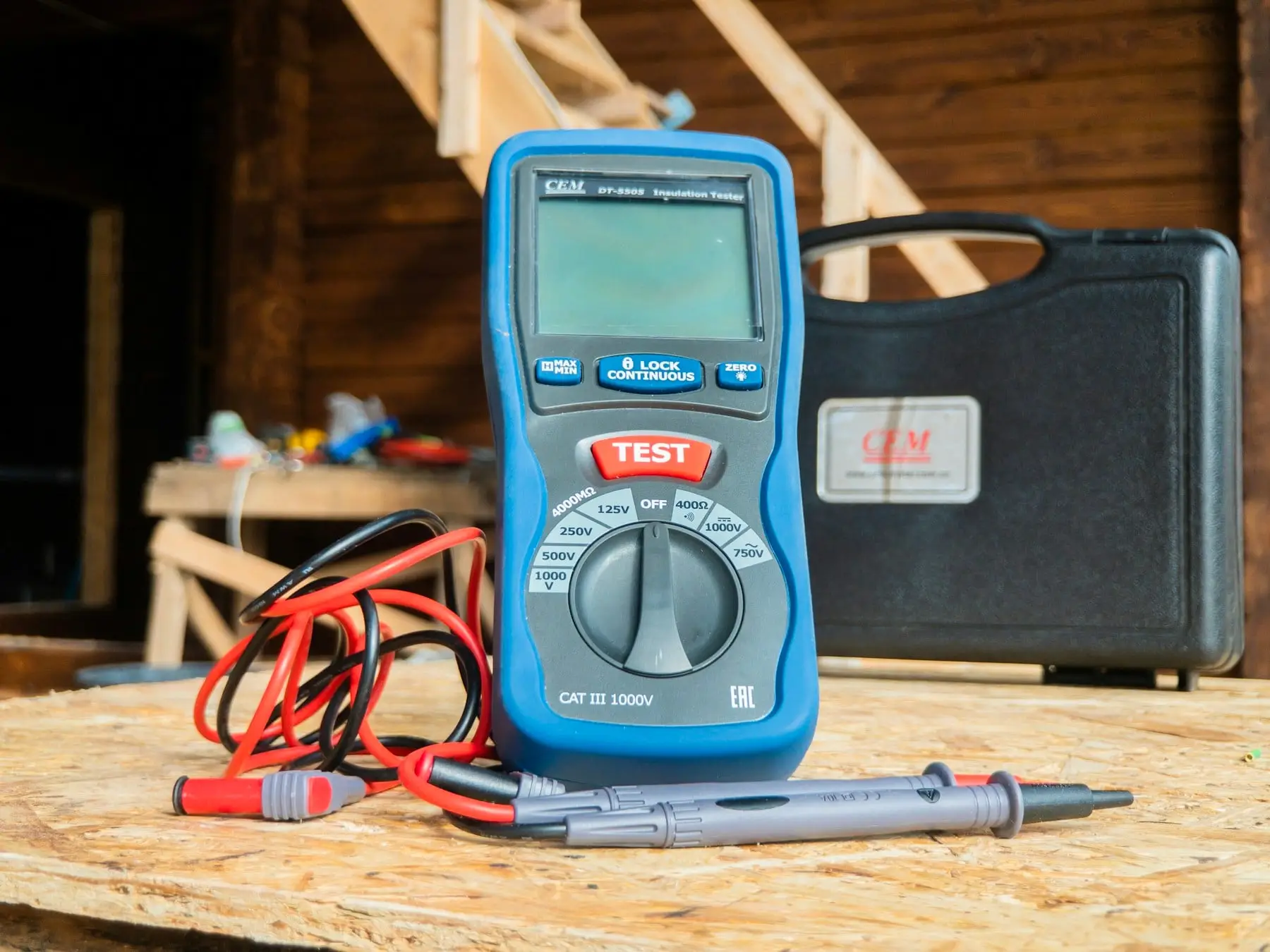
Insulation, protective devices and bonding tested, with the installation documentation handed over.
Common questions
What is equipotential bonding and does my pool have it?
It is a conductor tying all the metal around the pool to the same electrical potential, so a fault cannot create a difference across a wet body. Many older installations here have it missing or corroded through, and it has no symptoms — testing continuity takes minutes.
My underwater lights keep failing. Why?
Usually the supply rather than the fittings. Underwater lighting runs at extra-low voltage from a transformer, and that transformer is frequently sitting in a chamber or plant room that floods each autumn. Moving it fixes what replacing fittings does not.
The pool trips the RCD after heavy rain. Is that dangerous?
It is telling you water has reached something it should not have. Do not keep resetting it — that removes the only protection standing between the fault and anyone in the water. It needs testing before the circuit is re-energised.
Does a hot tub need its own circuit?
Yes. A spa heater holds temperature for hours a day, which is a sustained load rather than a peak, so it needs a dedicated circuit with its own high-sensitivity residual current protection and a weatherproof enclosure — not a garden socket.
My salt chlorinator is behaving erratically. Is the cell dead?
Often not. Corrosion at terminals inside the control enclosure is more common than cell failure, and it produces exactly the erratic readings and cut-outs that get blamed on the cell, which is the expensive part.
Do you work on installations someone else built?
Yes, and most pool work we do is exactly that. We will tell you plainly what was done as a shortcut — an indoor-grade enclosure outdoors, a transformer in a flooding chamber, absent bonding — and what it costs to put right.
Our own work
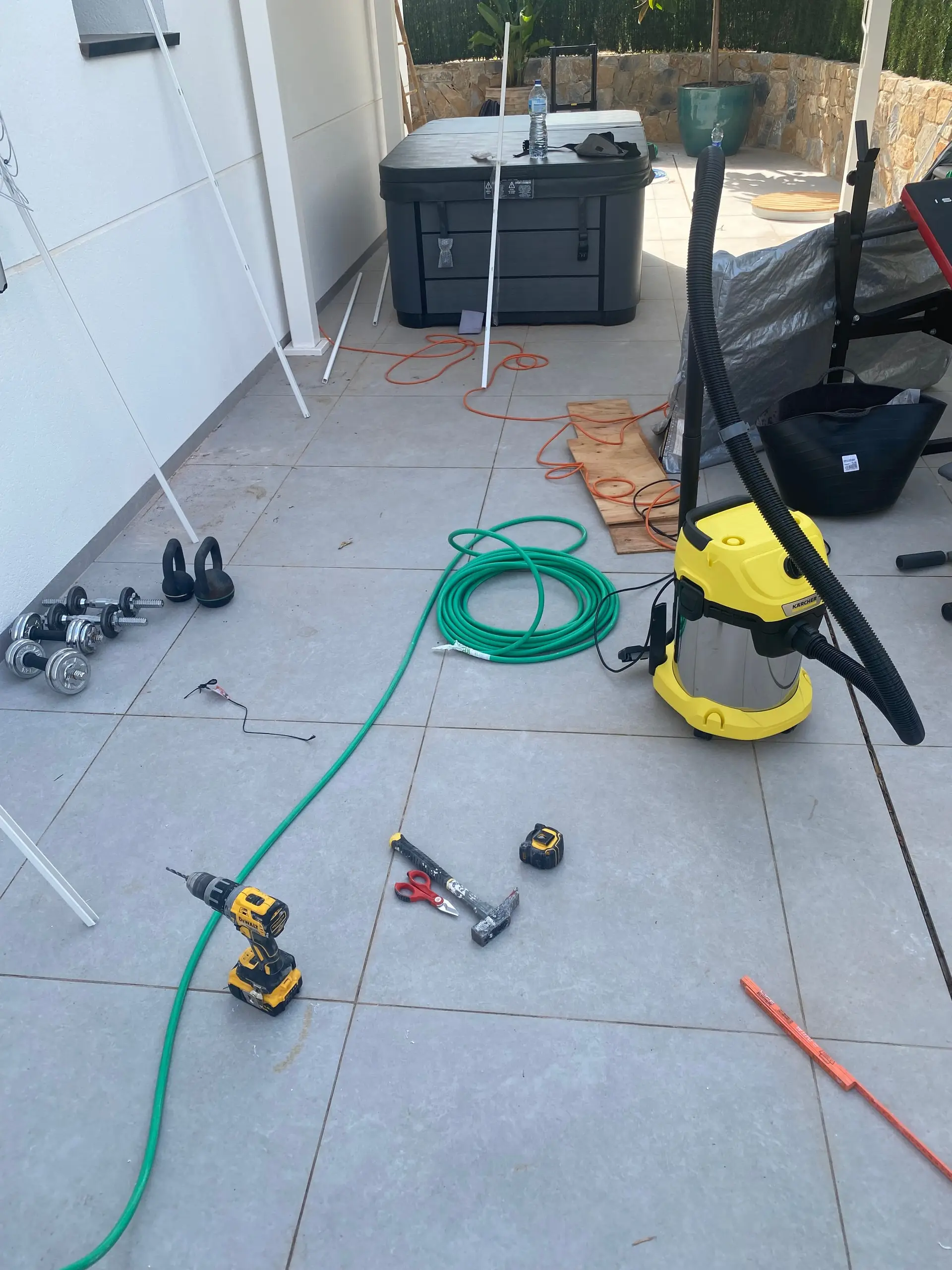
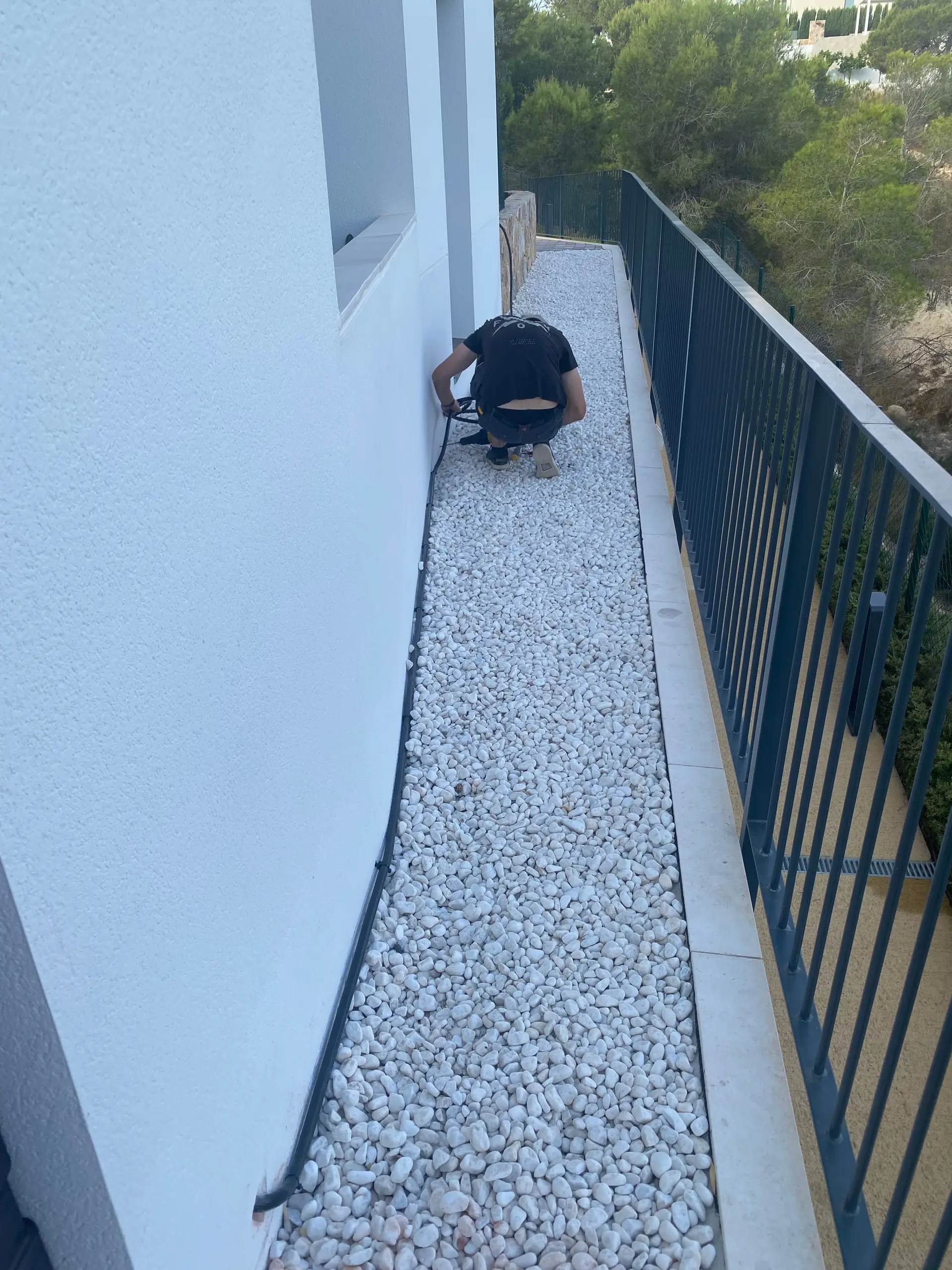
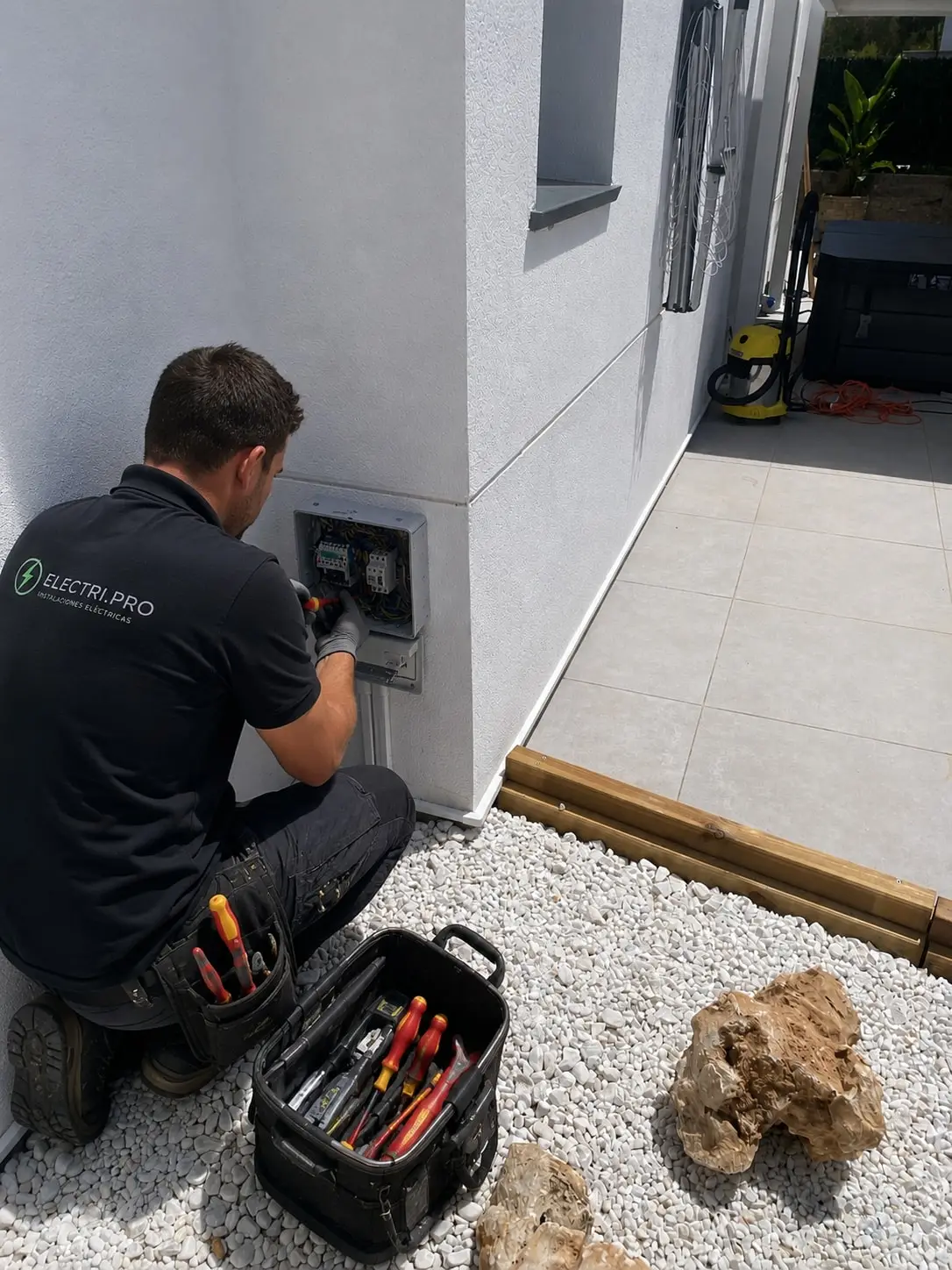
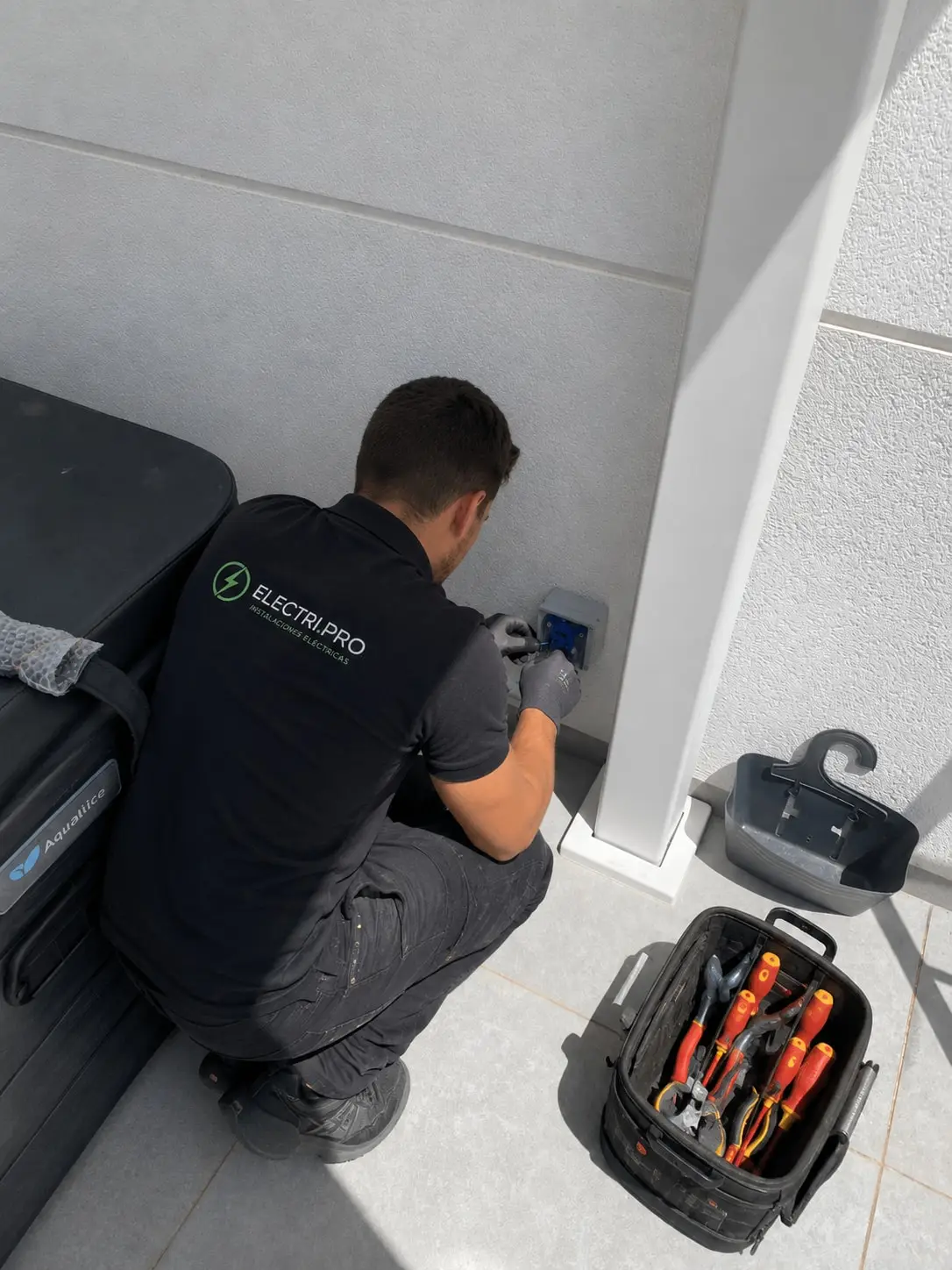
Photographs of installations we carried out ourselves. No stock photography.
Towns we cover
Guides worth reading first

Solar panel installation
Solar Panel Payback in Alicante, Honestly
This coast has excellent sun. That is the easy part, and it is not what decides whether an installation is a good investment.

Solar panel installation
Solar Panels and EV Charging Together
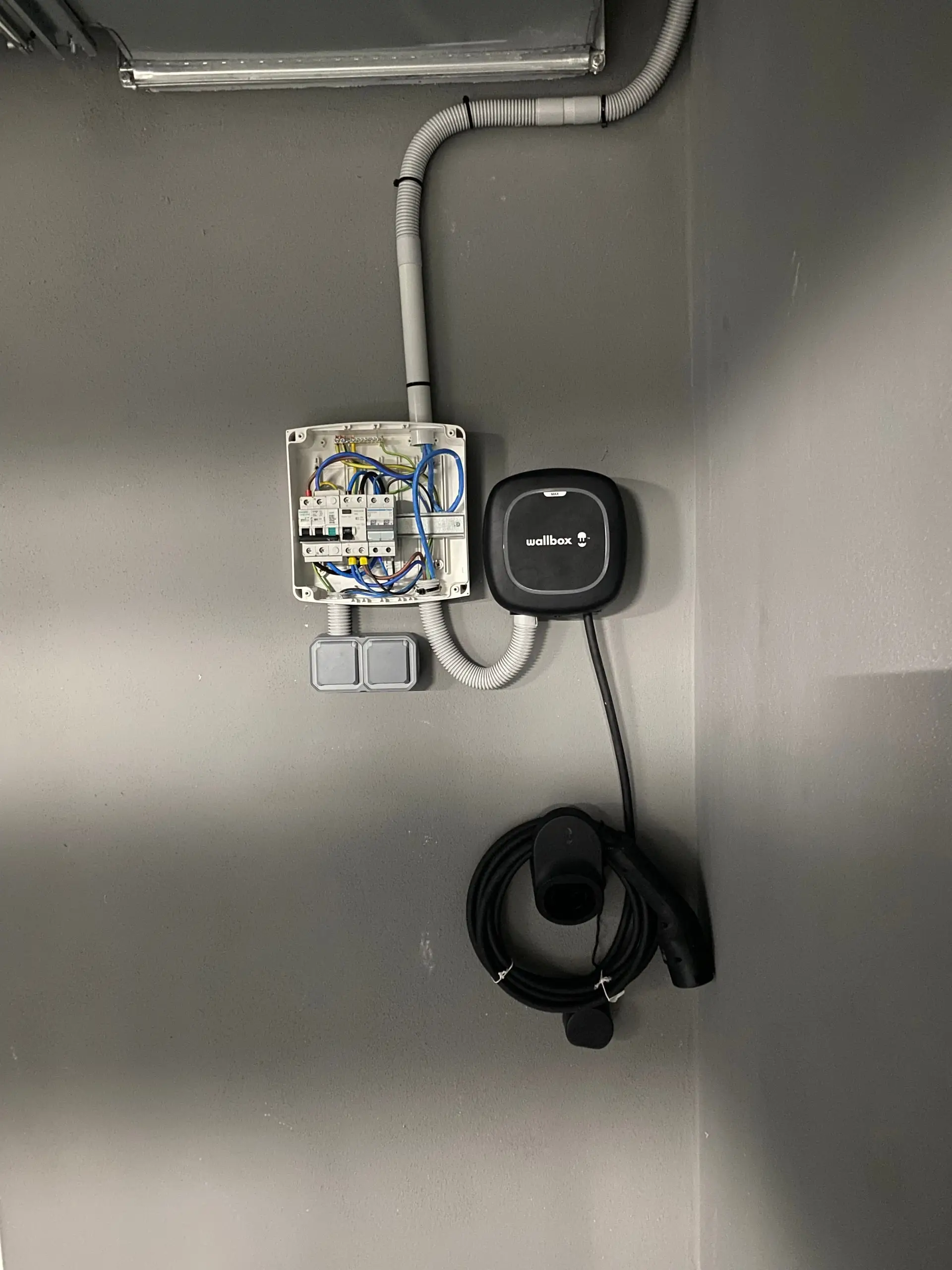
An electric car is the best load a solar installation can have, but only if it charges when the sun is up.
Related services
Shall we talk about your job?
Tell us what you need and we will come back with a price and a date. No obligation.