Services
Solar panel installation in Alicante and the northern Costa Blanca
Sized from what you actually use hour by hour, not from your roof area — because a system that generates at the wrong time of day pays for itself slowly.
- 24/7 for genuine emergencies
- We tell you the call-out fee before we set off
- Typically on site in 60–90 minutes
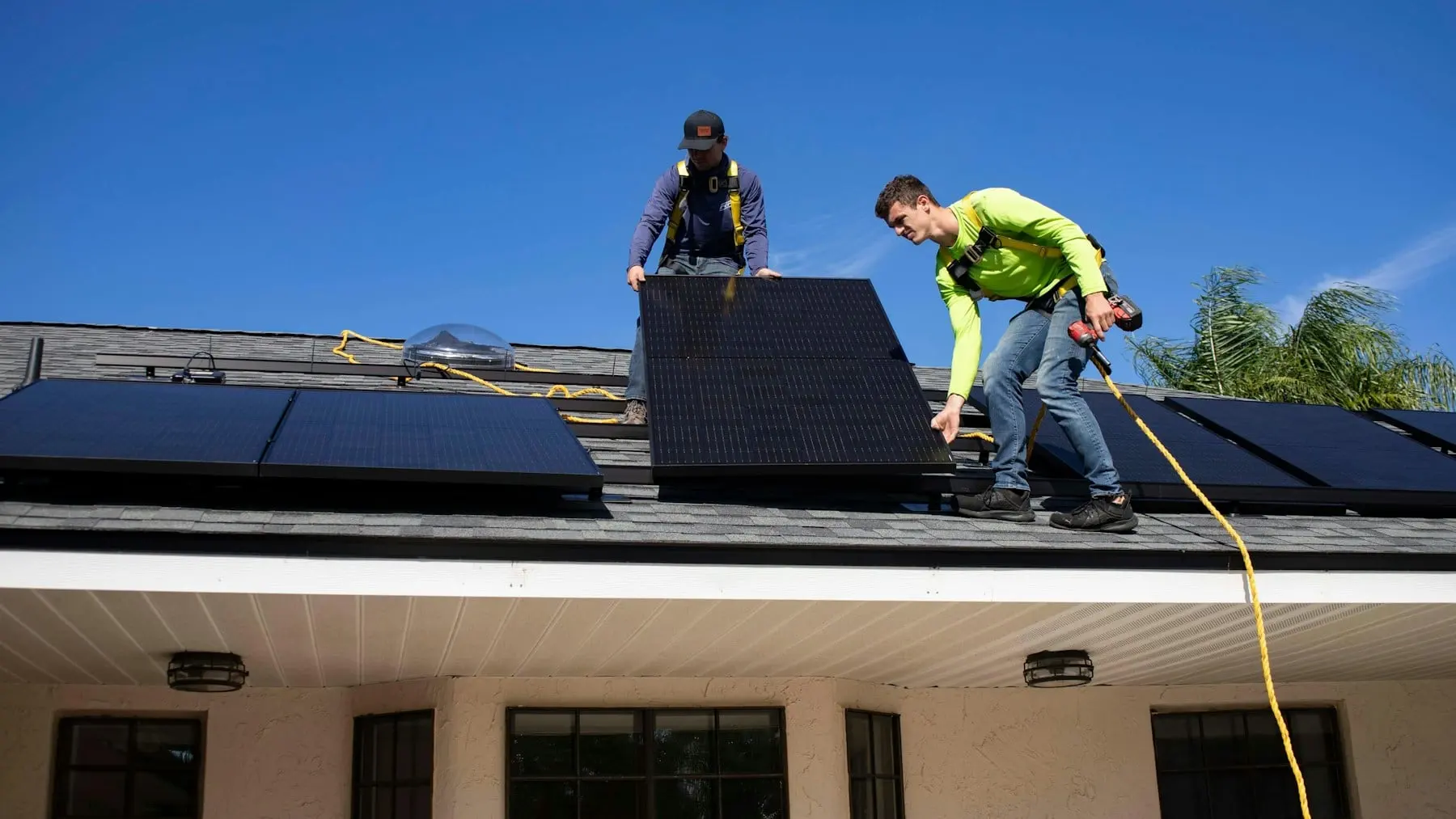
This coast gets roughly 3,000 hours of sun a year, and a well-oriented kilowatt of panels here produces somewhere around 1,500 to 1,700 kWh annually. Those are good numbers, and they are the reason solar works well in Alicante.
They are also not the whole story. What determines whether an installation is a good investment is not how much it generates but how much of that generation you use yourself, because the electricity you consume directly is worth several times what you are paid for the surplus you export.
How much can solar actually save you here?
The saving comes from self-consumption, and self-consumption depends on when you use electricity rather than how much. A household that is empty all day and does its washing at nine in the evening will export most of what it generates and save far less than a household of the same consumption that runs its pool pump, dishwasher and air conditioning between eleven and five.
This is why we ask for your actual hourly consumption data before sizing anything. Your distributor holds it, you are entitled to it, and it turns the entire conversation from an estimate into a calculation. Anyone quoting a system size and a payback period without having looked at it is guessing.
The practical consequence is often that a smaller system is the better investment. Adding panels beyond the point where you can absorb their output during the day increases the cost while adding only export revenue, which is the least valuable kilowatt-hour you can produce.
How many panels do you need?
For a typical Costa Blanca home, a system between 3 and 6 kWp covers most of what a household can realistically self-consume. That is roughly 7 to 14 panels depending on the panel rating, and it needs perhaps 15 to 30 m² of usable roof.
Households with a pool pump, air conditioning that runs through the afternoon, or an electric car charged during daylight can genuinely use the upper end of that range and beyond, because their daytime load is high and consistent. An apartment with no daytime occupancy usually cannot.
Orientation matters less than people fear. South is best, but east or west facing arrays lose relatively little annually and can suit consumption better — a west-facing array produces into the late afternoon, which is exactly when air conditioning load peaks here. What genuinely hurts is shading, and even partial shade on one panel affects more of the array than most people expect.
What happens to the electricity you do not use?
Surplus you export is compensated on your bill under the simplified compensation arrangement, but at a rate well below what you pay to import. That asymmetry is the single most important number in any solar calculation, and it is why self-consumption dominates the economics.
It also means the compensation is capped in practice by what you spend: the mechanism offsets your energy charges, so exporting far more than you import does not turn into a payment. Sizing an array to "sell electricity" is a misunderstanding of how the arrangement works in Spain.
The useful lever is shifting load into daylight rather than adding panels. Running the washing machine, dishwasher, pool filtration and car charging in the middle of the day costs nothing to change and improves the return on the system you already have.
Are batteries worth it?
A battery makes financial sense when you generate a real surplus during the day and consume substantially in the evening — and it makes less sense than people assume, because it competes against export compensation rather than against your full import price for that portion.
Where a battery is genuinely compelling is where the value is not purely financial: a property with an unreliable supply, or an owner who wants light and a fridge through a cut. That is worth being clear about, though, because a standard grid-tied system with a battery does not automatically keep working in a power cut. That needs a hybrid inverter and a designated backup circuit, specified deliberately.
Our usual advice is to install the array first, live with it for a season, and look at real data before adding storage. You will know your actual surplus profile by then instead of estimating it.
What does the roof itself have to cope with?
On the common Spanish tiled roof, panels are mounted on hooks that transfer load to the rafters rather than to the tiles, with the tile above dressed back over the hook. Done properly nothing is drilled through a tile and the roof stays watertight; done badly this is where leaks come from, and they show up in the first serious autumn storm rather than on the day.
Flat roofs and terraces take ballasted or mechanically-fixed frames set at a tilt, which gives freedom on orientation but has to account for wind uplift — a consideration that is not theoretical on an exposed coastal roof.
Either way the installation includes DC and AC protection, correct earthing and bonding of the frame, and cable routes that are protected from UV. Those are the parts nobody looks at and the parts that determine whether the system is still safe in fifteen years.
How we work
Read your consumption
We obtain your hourly consumption data and look at when you actually use electricity.
Survey the roof
We check orientation, pitch, shading through the day and the structure the panels will fix to.
Size and quote
We size the array to what you can self-consume and quote it as a fixed figure.
Install
We mount the array, run protected DC and AC, earth the frame and fit the inverter.
Commission and register
We test, commission and prepare the documentation for the self-consumption registration.
Common questions
How much does a solar panel generate in Alicante?
A well-oriented kilowatt of panels produces roughly 1,500 to 1,700 kWh a year on this coast, helped by around 3,000 hours of sun annually. What that is worth to you depends on how much of it you use directly.
What size system do I need?
Most Costa Blanca homes land between 3 and 6 kWp, which is around 7 to 14 panels. Households with a pool pump, daytime air conditioning or an electric car can use more, because their daytime consumption is higher.
Will solar panels keep my lights on in a power cut?
Not on their own. A standard grid-tied system shuts down in an outage for safety. Running through a cut requires a hybrid inverter, a battery and a designated backup circuit, all specified deliberately at the design stage.
Is it worth adding a battery?
It depends on your evening consumption and your daytime surplus. Because a battery competes against export compensation rather than your full import price, we usually suggest installing the array first and reviewing real data after a season.
Does east or west orientation ruin the output?
No. South produces most annually, but east and west arrays lose relatively little and can match consumption better — a west-facing array generates into the late afternoon, when air conditioning demand here is at its highest.
Will drilling for the mounts make my roof leak?
It should not. On a tiled roof the mounting hooks fix to the rafters and the tile above is dressed back over them, so nothing is drilled through a tile. Leaks come from shortcuts here, and they appear in the first heavy autumn storm.
Towns we cover
Guides worth reading first

Solar panel installation
Solar Panel Payback in Alicante, Honestly
This coast has excellent sun. That is the easy part, and it is not what decides whether an installation is a good investment.

Solar panel installation
Solar Panels and EV Charging Together
An electric car is the best load a solar installation can have, but only if it charges when the sun is up.
EV charger installation
What an EV Charger Installation Really Costs
The charger is rarely the expensive part. Four other things are, and none of them are visible in a photograph.
Related services
Shall we talk about your job?
Tell us what you need and we will come back with a price and a date. No obligation.