Ask three installers for a price on the same wallbox and you can get three very different numbers. That is not usually because one of them is overcharging. It is because the charger is a small and fairly standardised part of the job, and almost everything that varies is in the installation around it.
Here is what actually moves the figure.
What determines the price?
Four things, in roughly this order of impact: the distance from your supply to the parking space, the state of your existing consumer unit, whether your supply can carry the load, and how difficult the cable route physically is.
Notice what is not on that list. The brand of charger matters far less than any of the four, and the difference between a mid-range wallbox and a premium one is frequently smaller than the difference between a five-metre cable run and a forty-metre one.
Why does the cable run matter so much?
Because cable is sized for voltage drop over its whole length at full load, not just for the current it carries.
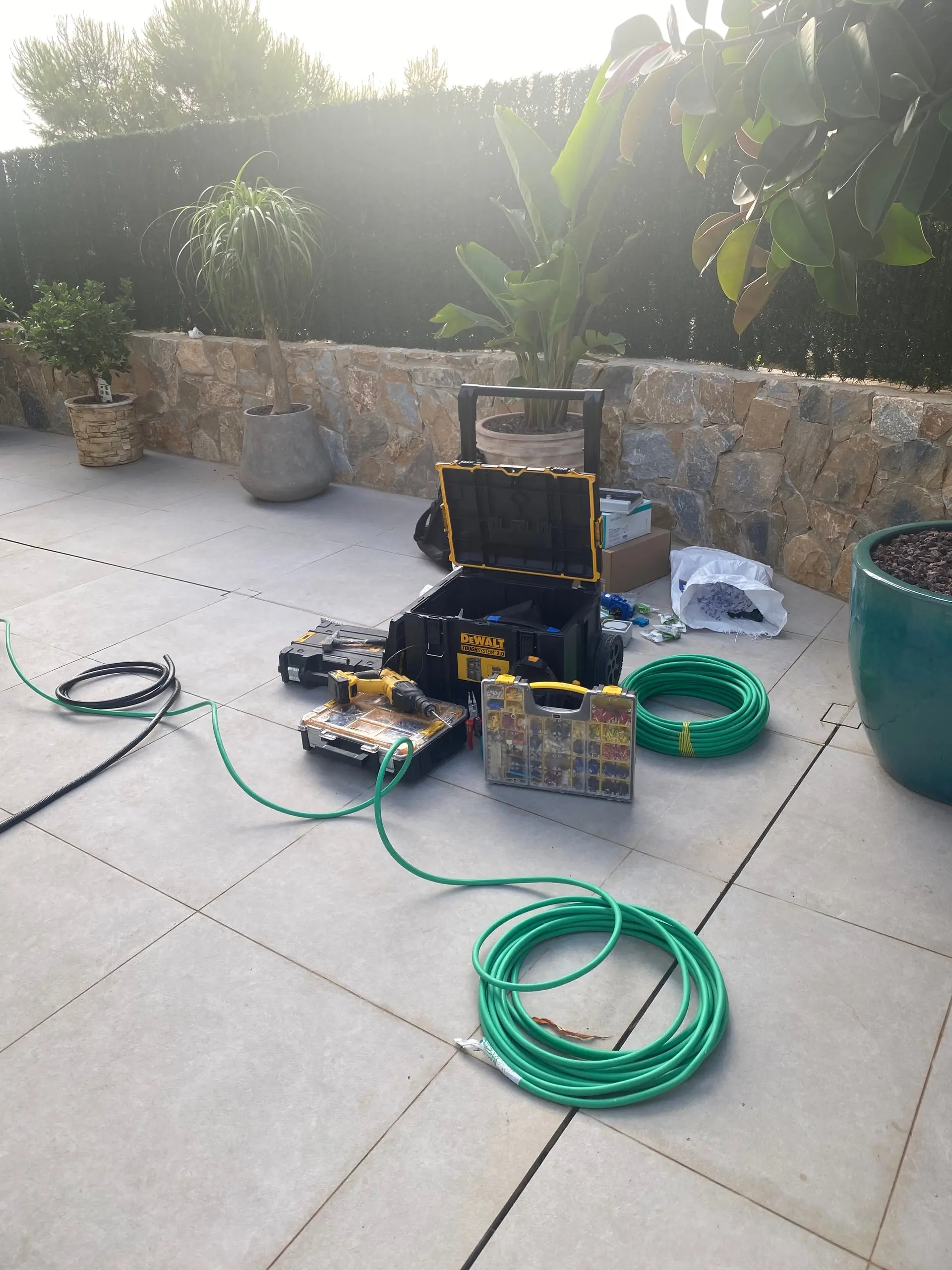
A charger drawing 7.4 kW continuously for six hours is a very different duty from a socket that runs a vacuum cleaner for ten minutes. The conductor has to be sized so the voltage at the far end stays within limits for the entire session, and that requirement grows with distance. Double the run and you do not double the copper, but you do move up in cross-section, and on long runs the cable becomes the single largest line in the quote.
This is why a garage eighty metres up a drive costs materially more than an integral garage five metres from the board, for exactly the same charger, and why nobody can give you a real number from a photograph.
What about the consumer unit?
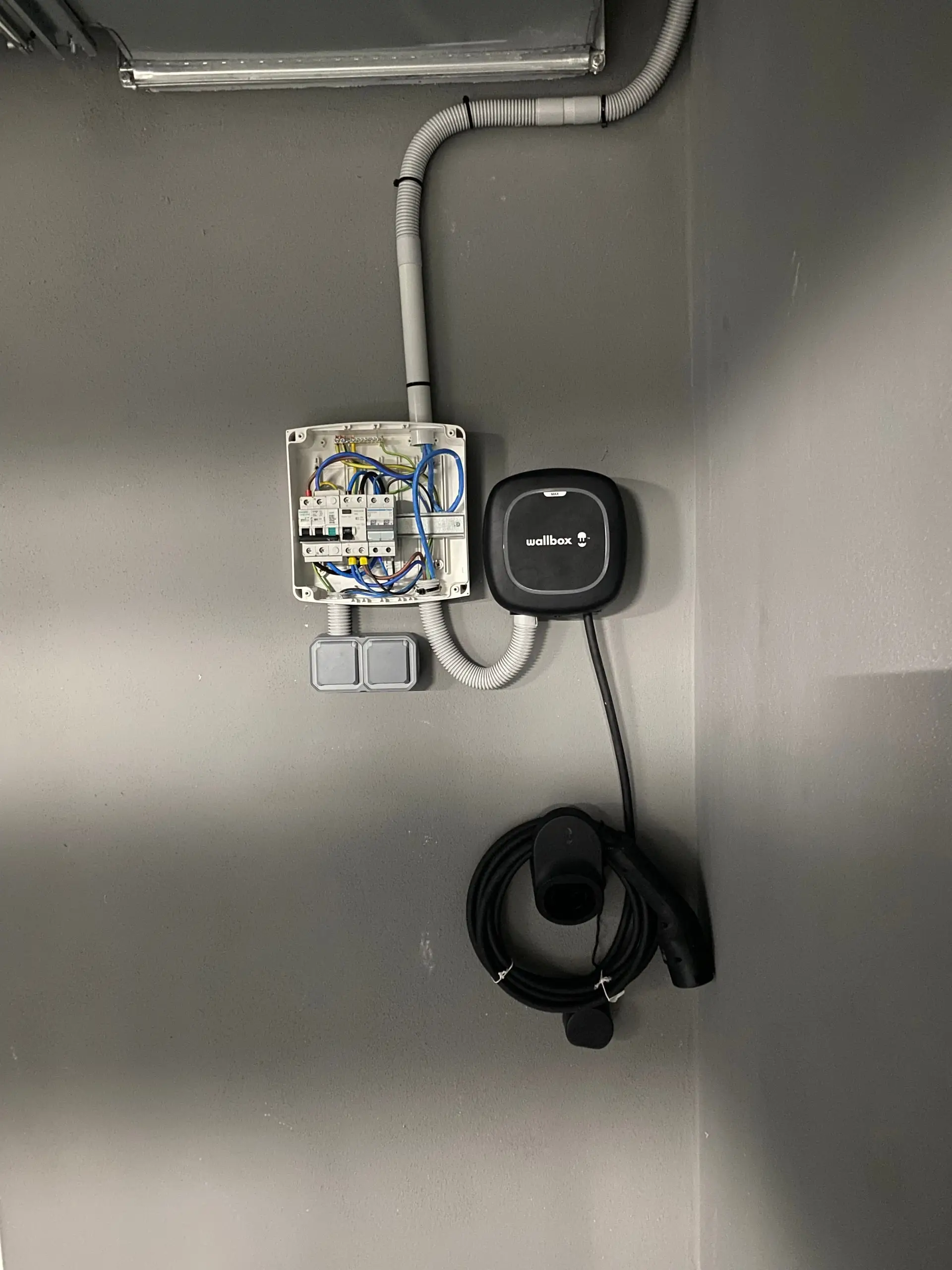
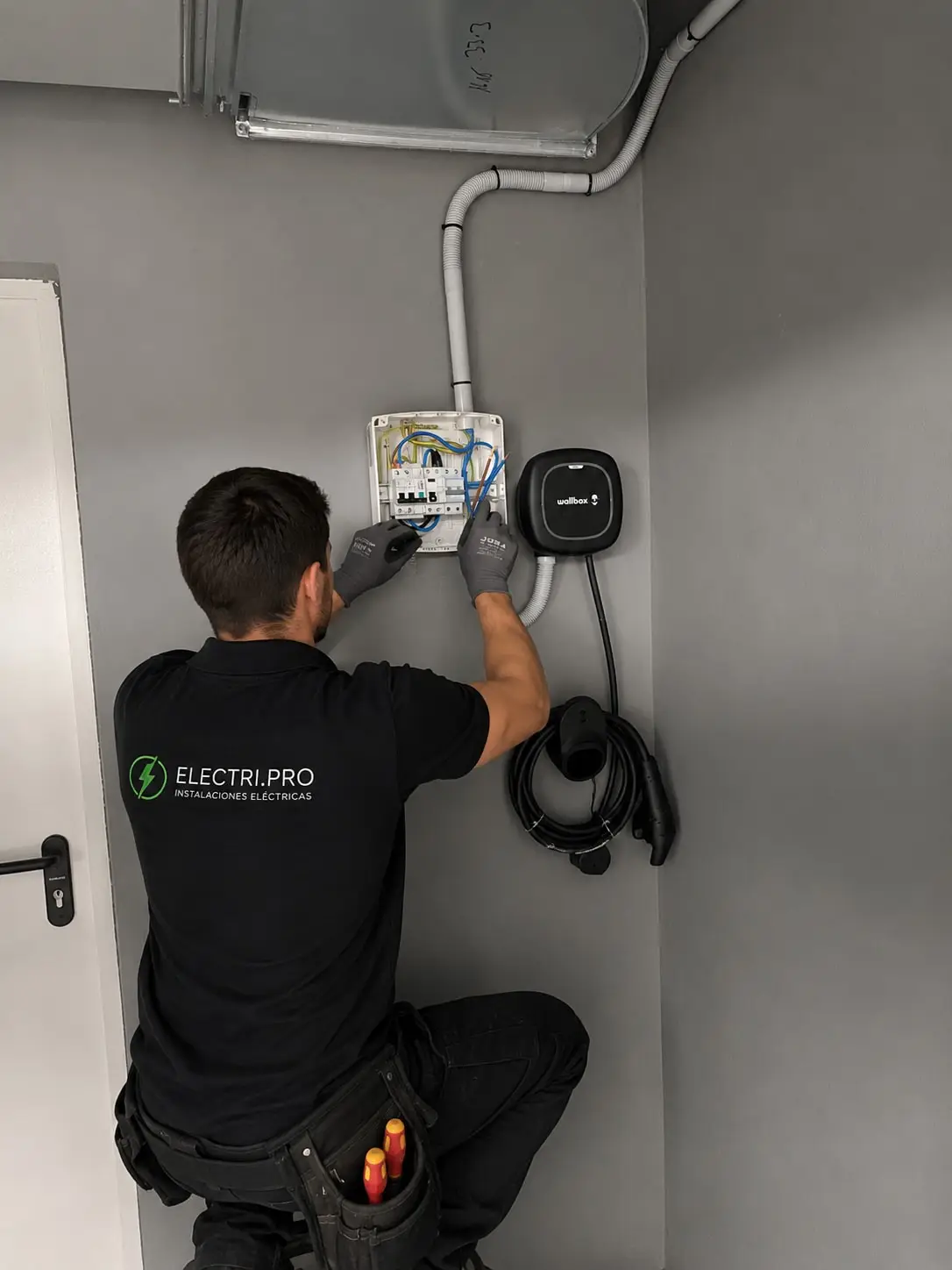
A charging point needs its own circuit and its own residual current protection rather than sharing with the rest of the house. If your board has a spare way and is in good condition, that is straightforward. If it is full, or is an older board without the protective devices a new circuit requires, then part of the job is dealing with the board before the charger circuit can exist at all.
This is the item that most often surprises people, because it is invisible until someone opens the board. It is also the item most likely to be quietly left out of a cheap quote and reappear as an extra once work starts.
Do you need to increase your contracted power?
Usually not, and this is where a good installer can save you a recurring cost.
Dynamic load management puts a sensor on your supply. The charger reads how much the rest of the property is drawing and takes only what is left, so the car charges more slowly while the oven is on and faster once it is off. You never exceed your contracted power and you never trip the main switch.
The alternative is raising your contracted power with the distributor, which increases the fixed portion of every bill for as long as you live there. For a car that sits on the drive for ten hours overnight, paying that permanently to charge faster on the few occasions the whole house is at full load is poor value. There are exceptions — two electric cars, or a household that genuinely needs a full charge in a short window — but for most homes the sensor is the better trade.
What should a quote include?
A quote worth accepting names all of the following: the cable, its cross-section and the run length; the protective devices and enclosure; the charger model; the labour; and the installation documentation. It should be one figure, not a headline price with provisional items underneath.
If a quote does not mention the cable run at all, it has been produced without anyone knowing the main cost driver, and it will change.
Why will nobody quote from photographs?
Because none of the four cost drivers are visible in one. A photo of a wall does not show the distance to the meter, what is inside the consumer unit, what your contracted power is, or whether the route between them crosses a garden, a driveway or a communal ceiling.
A site visit takes about twenty minutes and turns a range into a fixed figure. Any installer willing to commit to a price without it is either padding the number to cover the unknowns or planning to revise it later.
What you can find out before you call
Three things, all of which make the first conversation more useful. Your contracted power, which is on your electricity bill. Roughly how far your parking space is from where your meter is. And which car you have — because a vehicle limited to 7.4 kW on alternating current will charge at exactly that rate from a 22 kW charger, and paying for capacity your car cannot use is the commonest avoidable expense in this whole process.