This is the question we are asked most often, and it is the one where the answer most often saves people money. The instinct is that more kilowatts must be better. For overnight home charging, that is usually wrong.
What do the numbers actually mean?
The kW rating is how fast the charger can deliver energy. 7.4 kW adds roughly 35 to 40 km of range per hour. 11 kW adds around 55 to 60. 22 kW adds around 110 to 120.
Those figures are the charger’s capability. Whether you ever see them depends on two other things: your electricity supply, and your car.
Can your supply even do it?
11 kW and 22 kW both require a three-phase supply. Most Spanish homes are single phase, and on a single-phase supply 7.4 kW is the practical ceiling. No amount of specifying gets around that; it is a property of the connection, not the equipment.
Three-phase is common in commercial premises, workshops and industrial units — which is why fast charging is genuinely available in places like the Elche industrial estates and rare in a coastal apartment. Some newer developments have it. Older flats almost never do.
So for a large majority of homes on this coast, the choice is not between three options. It is 7.4 kW, and the conversation is over before it starts.
Can your car even accept it?
This is the part that catches people out, and it is worth being blunt about.
A charger and a car negotiate a rate, and the lower of the two wins. A great many electric vehicles accept a maximum of 7.4 kW or 11 kW on alternating current, which is what home charging uses. If your car is limited to 7.4 kW, it will draw exactly 7.4 kW from a 22 kW wallbox. Not a little more. Exactly the same.
Every euro of the price difference in that situation buys nothing at all. Before anyone specifies a charger, the question that should be asked is which car it is for, and the answer should be checked against the vehicle’s AC charging limit rather than its DC rapid-charging figure, which is a different and much higher number that applies only at motorway chargers.
So when is more than 7.4 kW worth it?
Three situations, in order of how often we see them.
You have three-phase supply and a car that can use 11 kW, and you regularly need to add a lot of range in a short window — a long commute, a lot of driving, or a car that comes home nearly empty and goes out early.
You have two electric vehicles sharing one charging point. Here the extra rate genuinely helps, because the available hours are being split between two cars.
You are charging somewhere the car does not sit all night: a business, a workplace, a property where the car is parked for two or three hours rather than ten. This is the case where 22 kW earns its cost, and it is why it belongs in commercial settings more than domestic ones.
The arithmetic that settles it
A car parked from seven in the evening until seven in the morning has twelve hours available. At 7.4 kW that is roughly 400 to 480 km of range added overnight.
Almost nobody drives that in a day. If your daily use is 50 km, a 7.4 kW charger replaces it in under two hours, and the remaining ten hours are spare capacity you have paid for and will never use. Adding a faster charger to that situation does not get you anything except a car that finishes charging at one in the morning instead of three.
What to do instead with the money
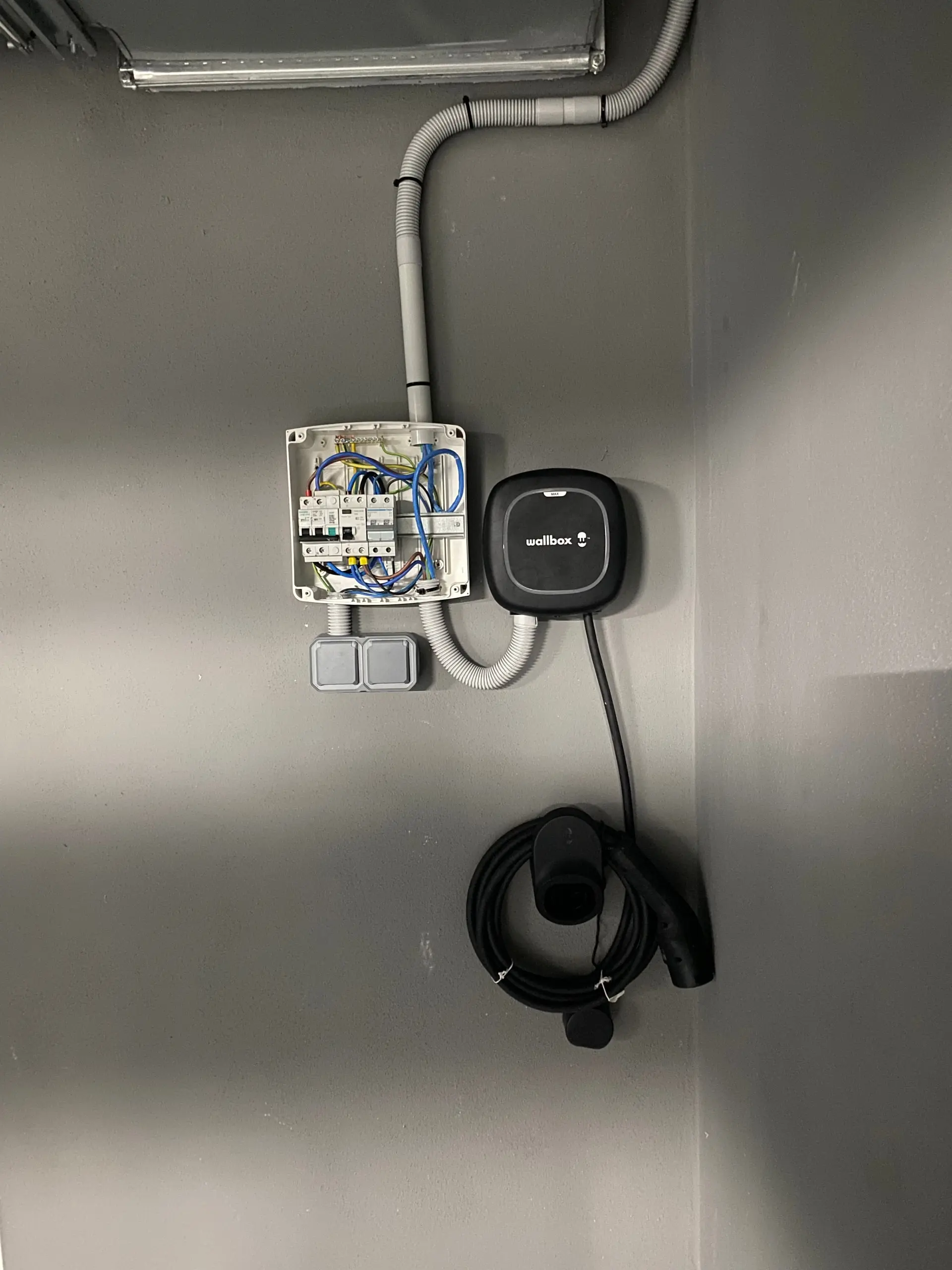
If your budget stretches beyond a basic 7.4 kW installation, the two upgrades genuinely worth having are dynamic load management, which lets the charger fit inside your existing contracted power and avoids a permanently higher standing charge, and a properly specified circuit with its own protection rather than a shortcut off an existing one.
Both of those improve the installation in ways you will actually notice. A kilowatt rating your car cannot use is not one of them.