Most people buying on the Costa Blanca look hard at the terrace, the view and the community fees, and barely glance at the consumer unit. Then the keys arrive, the electricity company asks for a boletín, and the installation that looked tidy at the viewing turns out to have no working earth. None of that is rare, and almost all of it can be found before you sign.
This guide is the short version of what we look at when a buyer asks us to check a property, and why each item matters to the price.
Why check the electrics before you buy?
Because the electrics are one of the few things in a property that can stop you living in it. A dated kitchen is a choice; a supply that the distributor will not reconnect is not.
There is also the money. Bringing an installation up to standard can be a small, contained repair or a full rewire, and which one you face depends on things nobody can judge by eye. Finding out before completion means the cost goes into the negotiation rather than onto your credit card in the first month.
Is there a boletín, and does it still mean anything?
The electrical certificate, the boletín or CIE, says the installation met the regulations when it was issued. Ask the seller or the agent for it early, along with the contracted power on a recent bill.
Having one is a good sign, but it is a snapshot. A certificate issued twenty years ago says nothing about the air conditioning, the induction hob or the extra sockets added since. What matters is whether the installation behind the paper would pass today. If you need a new one, our guide to getting a boletín in Alicante walks through the request itself.
Three situations make the certificate a practical question rather than a formality:
- The property has been empty. After more than a year without supply, the distributor requires a current certificate before reconnecting. Inherited homes and properties left between owners are where this bites.
- You want more power. Adding air conditioning, an induction hob or a car charger can take the property past what its certificate covers, and the certificate then has to be brought up to date first.
- You plan to let it to tourists. Registering a property as tourist accommodation is another point where the certificate is asked for.
What actually fails?
In the properties we see around Alicante, the same four things account for nearly every failed inspection.
No working earth. Very common in buildings from before the 1970s, and invisible until it is measured. Sockets with an earth pin connected to nothing are the classic version. This is the item that changes the size of the job.
Inadequate RCD protection. A board with no residual current device, or one device covering the whole home, so a damp outdoor light cuts everything. Our guide to replacing a consumer unit explains what a modern board should contain.
Bathroom zones. Sockets or switches where the regulations do not allow them, usually added during a refurbishment.
Degraded insulation. Old circuits that have run warm for years in a shared conduit. They often still work, but they fail the insulation test and will trip a new RCD repeatedly.
What can you check at the viewing?
You cannot measure an earth with your eyes, but a viewing still tells you a lot. Take photos of these and send them to whoever will advise you:
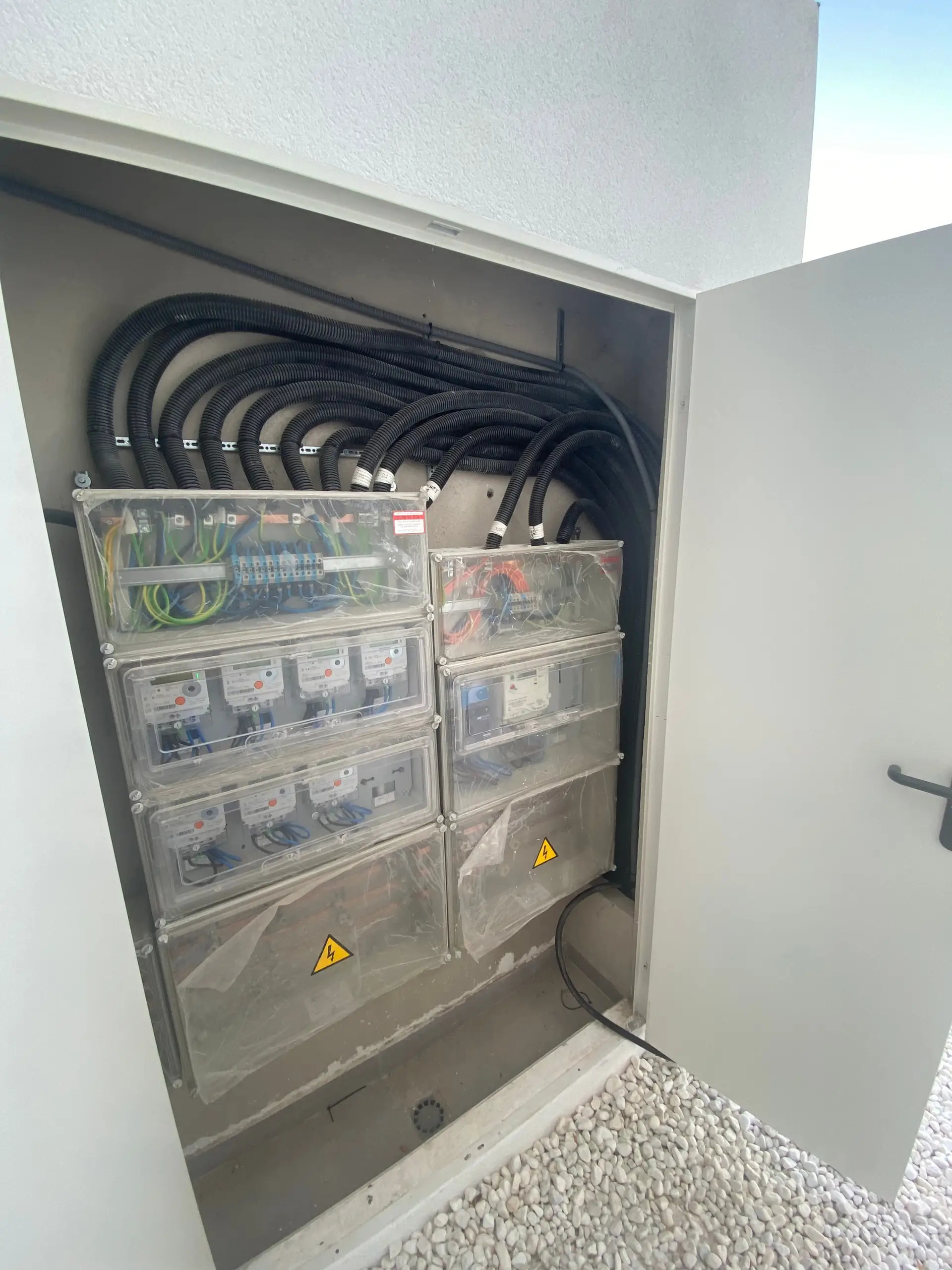
- The consumer unit with its front door open, never the cover behind it: ceramic fuses, a single RCD and handwritten labels for rooms that no longer exist are all clues.
- The meter and the contracted power on a recent bill, which tells you whether the home will run air conditioning and an oven together.
- Bathroom sockets and switches, and anything electrical within reach of the bath or shower.
- Outdoor sockets and lights on the terrace or by the pool, which on the coast are where damp gets in first.
- Scorch marks, warm smells or sockets that feel loose, which point to the faults described in our guide to common electrical faults.
How does a pre-purchase inspection work?
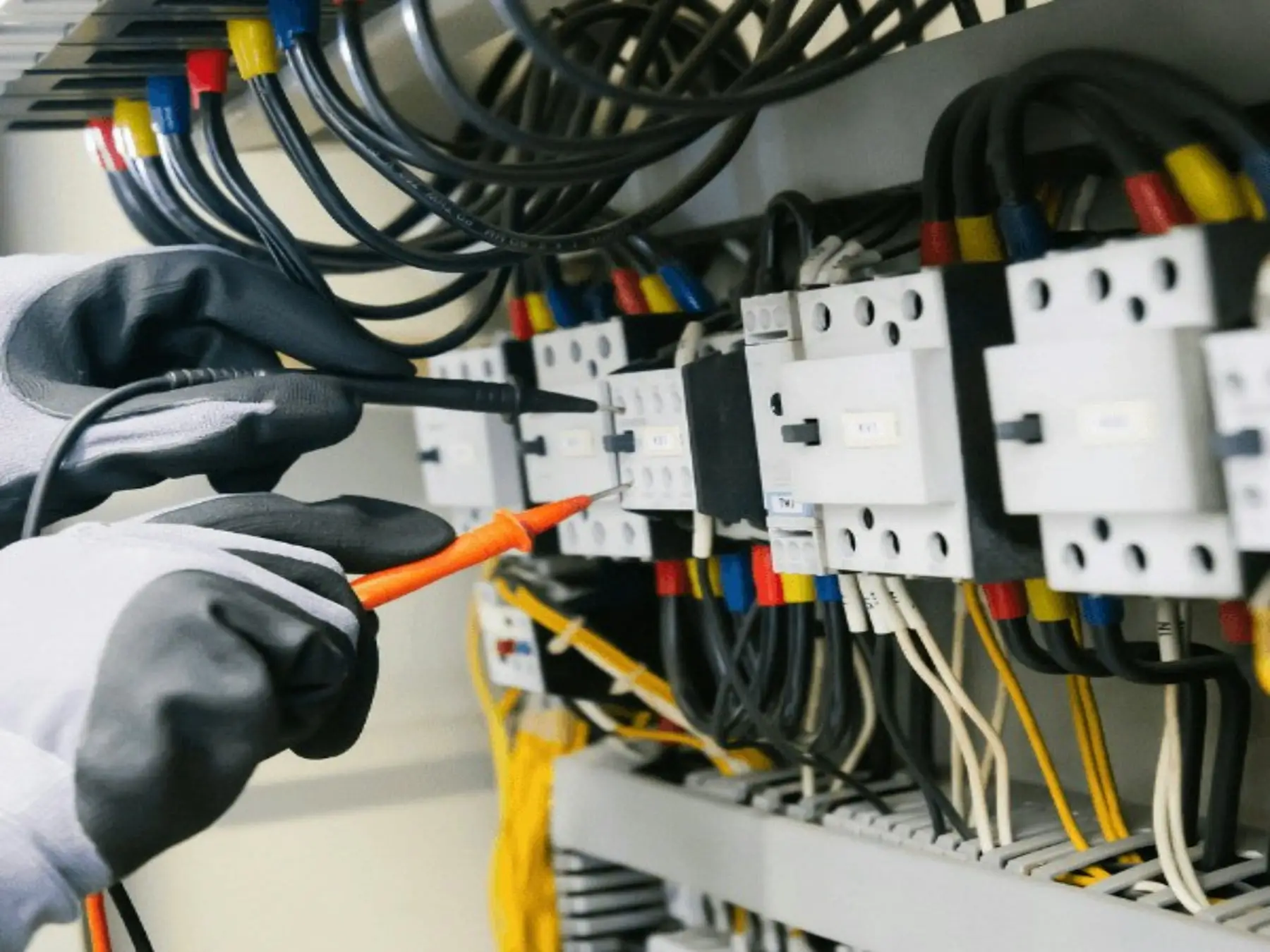
With the owner’s or the agent’s permission, we visit and test the installation as it actually is: earth continuity, insulation resistance, the board and its protection, the circuits and the wet-area requirements. It is a measurement exercise, done with instruments.
You get an itemised list of what fails and what each item costs to put right, before anything is agreed. That list is what you take to the negotiation, and you are free to have the work done by anyone. If the property needs a certificate after completion, we bring the installation up to standard and prepare the documentation; the certificate itself is issued and signed by an authorised installer we work with.
If you are working to a completion date, tell us at the start. A failed earth found two weeks before signing is a negotiation point; found the day after, it is a delay to moving in.
How to ask us to look
Send the address, your completion date if you have one, and photos of the consumer unit and a recent bill through the contact form or WhatsApp. In older Alicante buildings the situation changes from block to block, which is why our page on certificates in Alicante looks at the city specifically.