Most household electrical faults fall into a handful of patterns. Recognising which pattern you have narrows the cause considerably, tells you what you can safely check yourself, and gives the electrician a head start. This guide is about diagnosis. For the separate question of whether something needs attention tonight, read emergency or can it wait first.
Why does the RCD keep tripping?
An RCD (the diferencial) trips when current leaks to earth instead of returning along the circuit. In homes on this coast, three causes account for most of it.
Damp outdoor connections. Garden lights, outdoor sockets, pool and irrigation equipment, and junction boxes fixed to exterior walls all take in water eventually. The classic sign is an RCD that trips during or after rain, or after the garden has been watered, and behaves the rest of the time.
A failing appliance. Water heaters, washing machines, dishwashers, ovens and kettles are the usual suspects, because their heating elements break down with age and start leaking current to the casing. The sign is a trip that follows use of one particular appliance.
Humidity. Coastal properties, and especially flats closed up for months, collect moisture in sockets, back boxes and light fittings. The trip often appears in the first days after arrival, or on humid nights, and fades once the property has been aired and lived in. It is a warning rather than a cure: something is letting moisture in.
If the RCD trips once and resets, you can usually find the cause yourself (see below). If it trips again the instant you reset it, stop resetting it.
Why does the whole supply cut out?
If everything goes off and it is not the RCD, you have almost certainly exceeded your contracted power. The oven, the induction hob, the water heater and air conditioning all running at once is the classic combination on a summer evening.
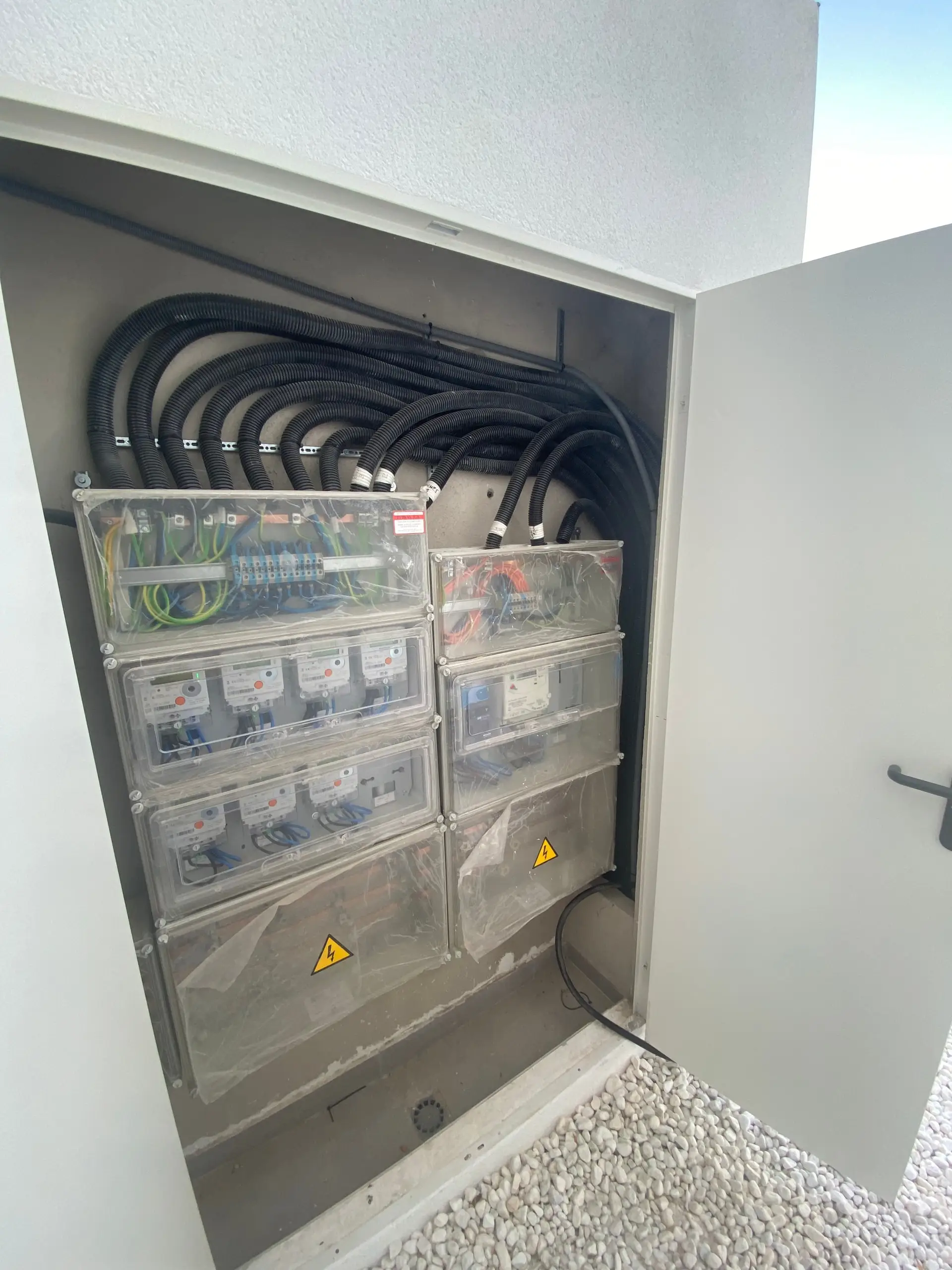
In most homes the limit is now enforced by the smart meter rather than a separate ICP in the board. When it cuts, switch off a large load or two before restoring the supply; depending on the installation, you then reset the main switch, press the reset on the meter, or wait briefly for it to reconnect on its own.
If this happens regularly, you have two choices: spread the load, or look at whether the contracted power suits the way you now live. Adding air conditioning is the commonest trigger, and it is worth checking the electrical side before the unit is bought.
A main switch (IGA) that trips with only light loads running is different. That points to a fault, not a contract, and it needs an electrician.
Why is one circuit dead?
Look at the board first. If one breaker is down, reset it once. If it holds, something on that circuit may have overloaded it; if it trips again straight away, there is a short circuit on it and it should stay off.
If every breaker is up and one circuit is still dead, the usual causes are a loose connection at a socket or junction box, or a failed connection inside the board. Sockets that work intermittently, or only when a plug is wiggled, belong in the same category. These are not things to open yourself, but they are routine repairs.
Why do lights flicker?
It depends on how many lights are doing it.
One fitting flickering usually means a failing lamp, an incompatible LED on a dimmer, or a poor connection at that fitting or its switch.
Several lights across the house flickering or dimming, especially when something large switches on, points to a weak connection somewhere common to them, or to the supply. If it comes with a buzzing or a warm smell anywhere, it becomes urgent.
Lights brightening and dimming while appliances behave strangely can mean a supply problem, including a fault on the neutral, which can damage electronics. Switch off sensitive equipment and report it.
What does a warm socket or burning smell mean?
A socket, plug or switch that feels warm, is discoloured or smells of hot plastic has a connection overheating. This is not a diagnostic puzzle: stop using it, switch off that circuit at the board, and treat it as urgent. If there is smoke or a smell of burning you cannot place, leave and call 112.
The usual cause is a loose terminal or a plug that no longer grips, often on a circuit carrying a heavy load such as a heater, a kettle or an extension lead feeding several appliances.
Is partial power loss the supply or your installation?
If part of the property has lost power and nothing on your board has tripped, check with a neighbour. If they have the same problem, the fault is on the distribution side and the distribution company is the one to contact.
Properties with a three-phase supply can lose one phase, which leaves some circuits dead and others working. In a block of flats, a fault in the communal installation can affect several homes at once. Neither is something you can fix from inside your own home. If your neighbours are fine and your board shows nothing, the fault is more likely in your own installation.
How do you isolate an appliance safely?
Use only what is designed to be operated: plugs, appliance switches and the switches on the front of the board.
Switch the appliance off and unplug it. For something wired in, such as an oven or a water heater, switch off its circuit breaker at the board and leave it off. Never remove the board’s cover, open a socket or touch bare wiring, and do not use anything that is wet, scorched or smells hot.
What should you tell the electrician?
Which switch moved on the board, and whether it resets. When it happens: rain, a particular appliance, a time of day, the first days after arriving. What else is affected. Whether there is any smell, warmth or visible damage. The age of the installation, if you know it. If the pattern points at the board itself, our guide to consumer unit replacement explains what a modern one changes.
Getting help
Send a photo of the front of the board and a short description of the pattern through the contact form or WhatsApp. Photos help us understand the job before the visit; the final price comes after we have found the fault. Genuine emergencies are answered at any hour, with the call-out fee agreed before we travel — the details are on our emergency electrician page.